Cyber Risk Institute Profile Explained: A Practical Guide for Financial Institutions
Financial institutions operate in one of the most demanding risk environments in the world. Every decision is shaped by regulation, scrutiny, and the expectation that systems will remain stable even under pressure. For global banks, fintechs, insurers, and payment providers, the challenge is not just security. It is alignment. Different regulators, different expectations, different reporting formats, all asking similar questions in slightly different ways.
This is exactly the problem the Cyber Risk Institute Profile was designed to solve.
At Capture The Bug, we see this play out every day. Security leaders are not short on frameworks. They are short on time, clarity, and a single way to explain their cyber posture to boards, auditors, and regulators across regions.
This guide breaks down what the Cyber Risk Institute Profile is, who it is for, how it works, and how financial institutions can use it as a practical foundation for stronger, more defensible security programs.
What is the Cyber Risk Institute Profile
The Cyber Risk Institute Profile is a cybersecurity framework created specifically for the financial sector. It was developed with direct input from major financial institutions, regulators, and industry bodies to address a long-standing problem: overlapping and inconsistent regulatory expectations.
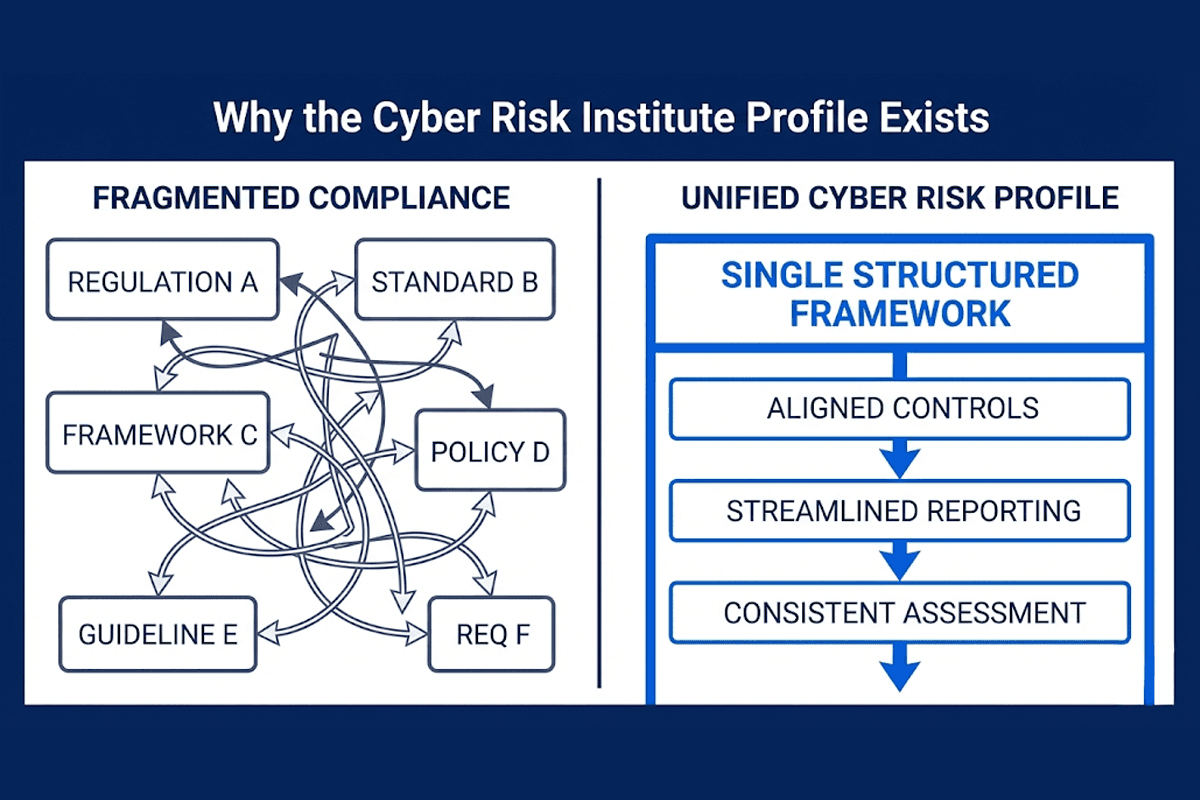
Instead of asking institutions to respond separately to dozens of cybersecurity standards, the Profile brings them together into one harmonized structure. The goal is simple. Reduce duplication. Improve consistency. Make it easier for regulators and institutions to speak the same language about cyber risk.
With the retirement of the FFIEC Cybersecurity Assessment Tool, many institutions needed a modern, globally relevant alternative. The Cyber Risk Institute Profile fills that gap by offering a broader, more flexible model that works across jurisdictions.
What makes it different is its focus on proportionality. Institutions are not expected to implement every control at the same depth. Requirements scale based on the institution's systemic impact and risk exposure.
Why financial institutions are adopting it now
Cyber risk has become a board-level issue. Regulators expect not just controls, but evidence of governance, oversight, and ongoing risk awareness.
The Profile helps institutions show that their security programs are not ad hoc or reactive. It provides a structured way to demonstrate that risks are identified, controls are appropriate, and leadership is actively involved.
For multinational institutions, this matters even more. Instead of preparing different narratives for different regulators, teams can anchor their reporting to a single, recognized framework that maps cleanly to regional requirements.
Understanding the impact tiers
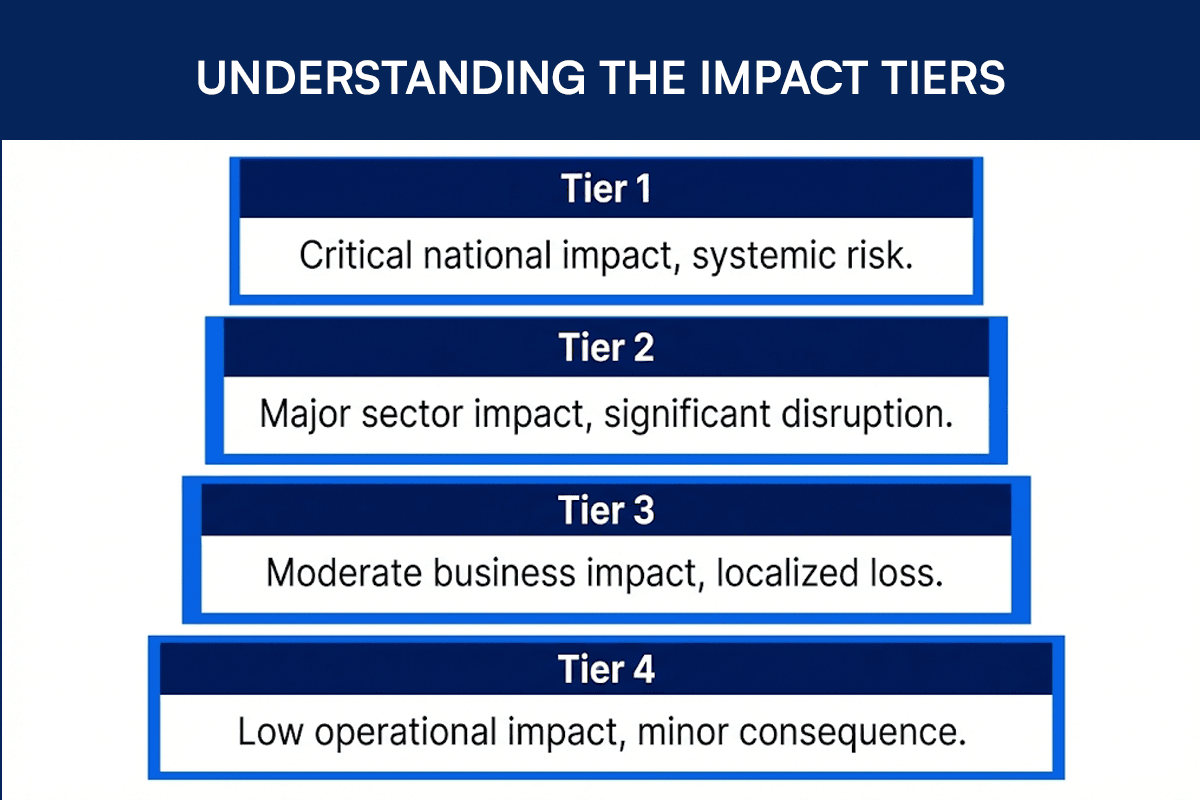
One of the most practical features of the Cyber Risk Institute Profile is its tiered structure. Institutions are grouped based on their potential impact on the financial system if a major cyber incident were to occur.
There are four impact tiers:
Tier 1: National or Super-National Impact
These are institutions whose failure could affect a national economy or global financial stability. A major breach here could have far-reaching consequences.
Tier 2: Subnational Impact
Large institutions serving millions of customers. An incident would have serious regional or sector-level effects but would not destabilize the entire system.
Tier 3: Sector Impact
Organizations that play critical roles within specific financial ecosystems. Their importance is defined more by connectivity and data sensitivity than by size alone.
Tier 4: Localized Impact
Smaller institutions or service providers with limited systemic influence. A breach would be serious but largely contained.
The tier determines how many diagnostic statements apply and how rigorous controls need to be. This prevents smaller institutions from being forced into heavyweight programs designed for global banks, while still holding systemically important players to higher standards.
Who should align with the Profile
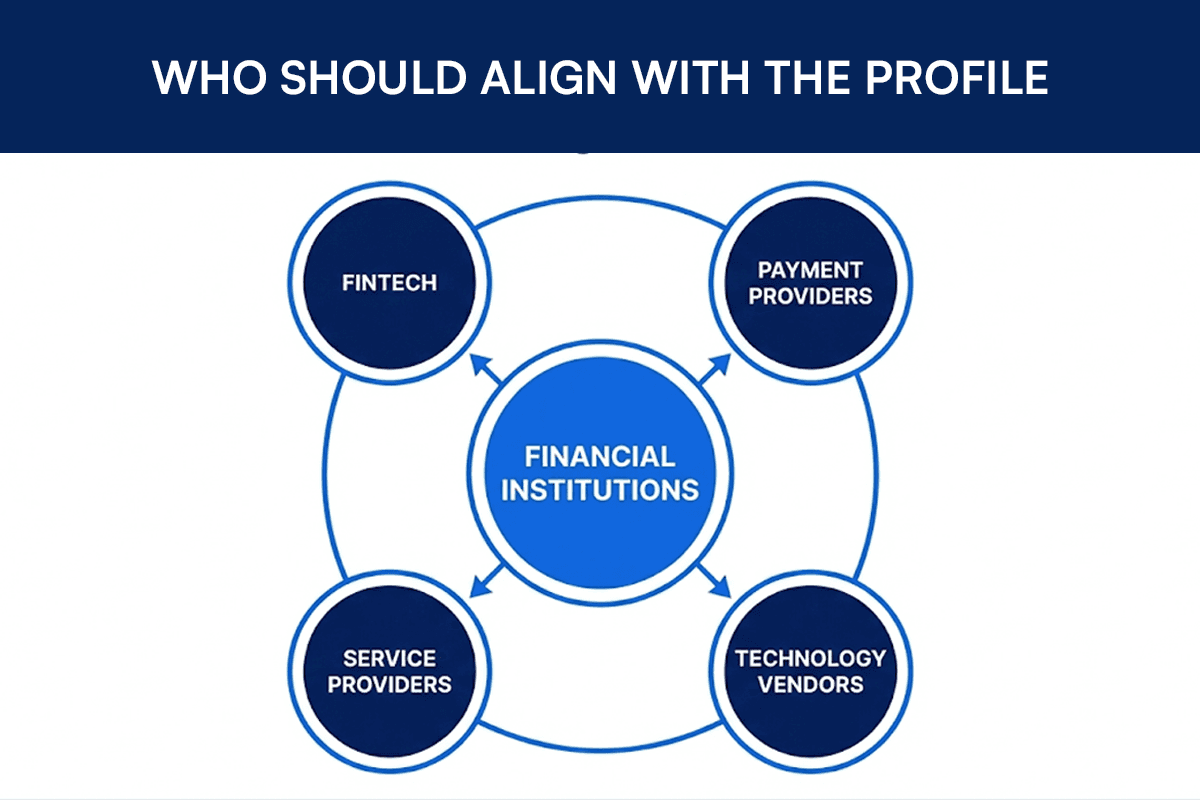
The Profile is primarily designed for financial institutions. This includes banks, credit unions, insurers, fintech companies, payment processors, and market infrastructure providers.
But its influence does not stop there.
Any organization that supports financial institutions is increasingly expected to align with the same expectations. This includes technology providers, managed service firms, and security vendors that handle sensitive financial data.
Even though alignment is not legally mandatory, it is quickly becoming a baseline expectation in regulatory discussions and third-party risk reviews.
Key benefits for financial institutions
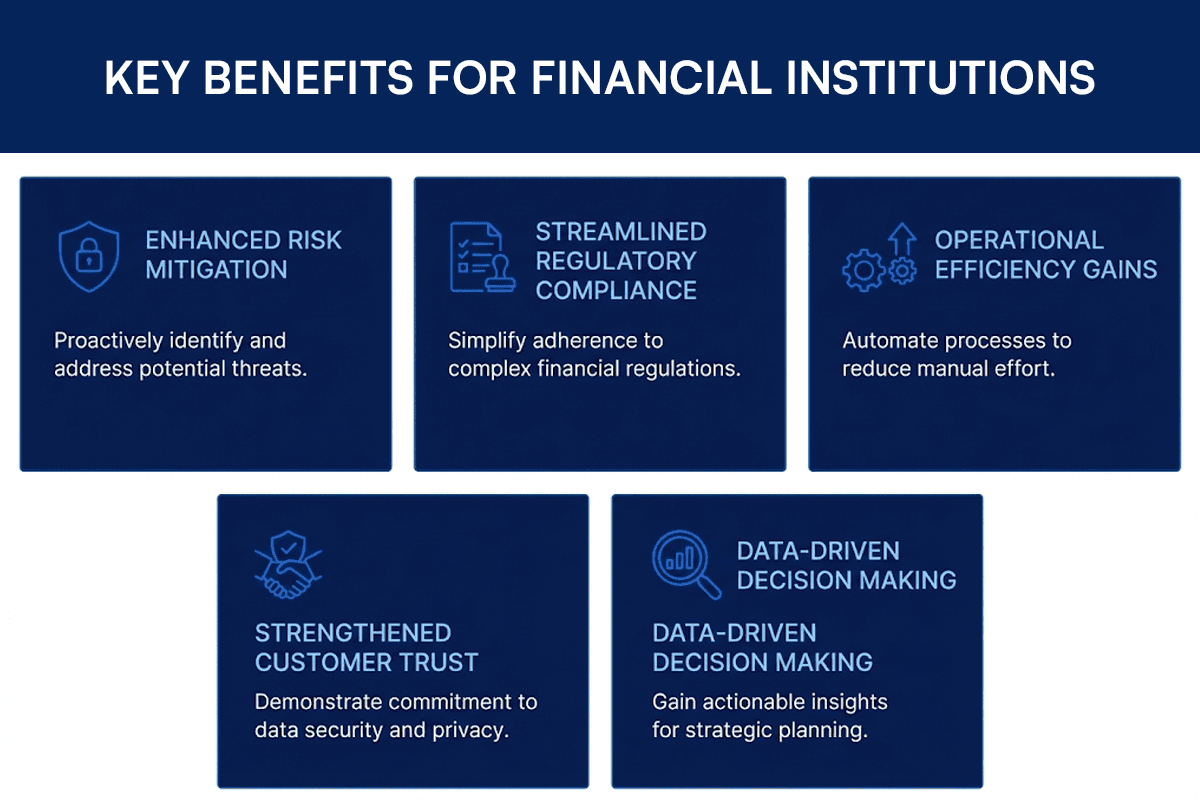
- Reduced regulatory fatigue: By consolidating overlapping expectations into one structure, teams spend less time repeating the same answers in different formats.
- Clear governance signals: The Profile places strong emphasis on leadership oversight. This helps institutions demonstrate that cyber risk is managed at the right level, not buried in technical teams.
- Risk-based scaling: Controls are applied in proportion to impact and exposure. This makes programs more sustainable and defensible.
- Stronger third-party oversight: The framework reinforces the need to understand and manage vendor risk, which is a major concern for regulators worldwide.
- Cross-framework alignment: Institutions already working with standards like ISO 27001 or SOC reporting can map existing controls instead of starting from scratch.
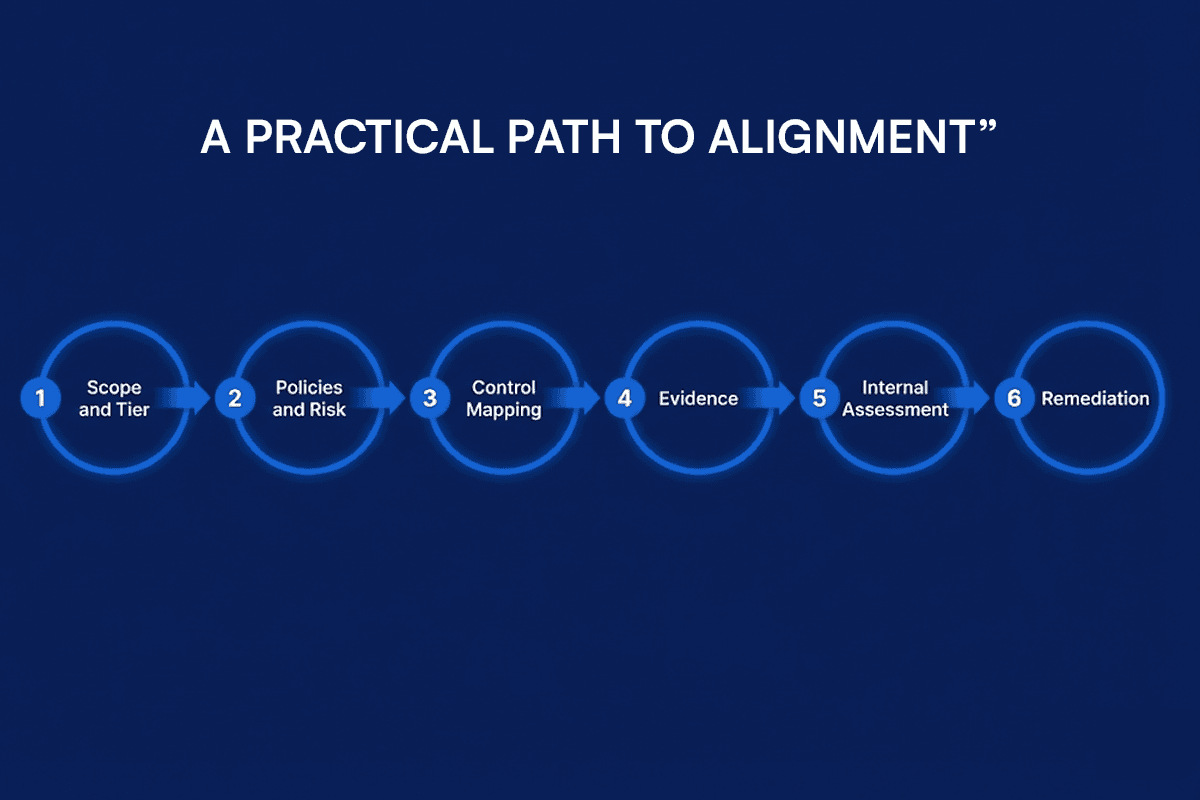
A practical path to alignment
Aligning with the Cyber Risk Institute Profile does not happen overnight. Based on what we see in the field, successful programs follow a clear sequence:
1. Define scope and impact tier
Start by identifying which systems, processes, and data flows are in scope. Then determine the appropriate impact tier using the Profile's questionnaire. When in doubt, conservative scoping reduces future regulatory risk.
2. Establish policies and risk structure
Policies should reflect the expectations of the chosen tier. Risk assessments should focus on realistic threat scenarios relevant to the institution's role in the financial ecosystem.
3. Map existing controls
Most institutions already have controls in place. Mapping them to the Profile's diagnostic statements helps highlight gaps without duplicating work.
4. Gather evidence early
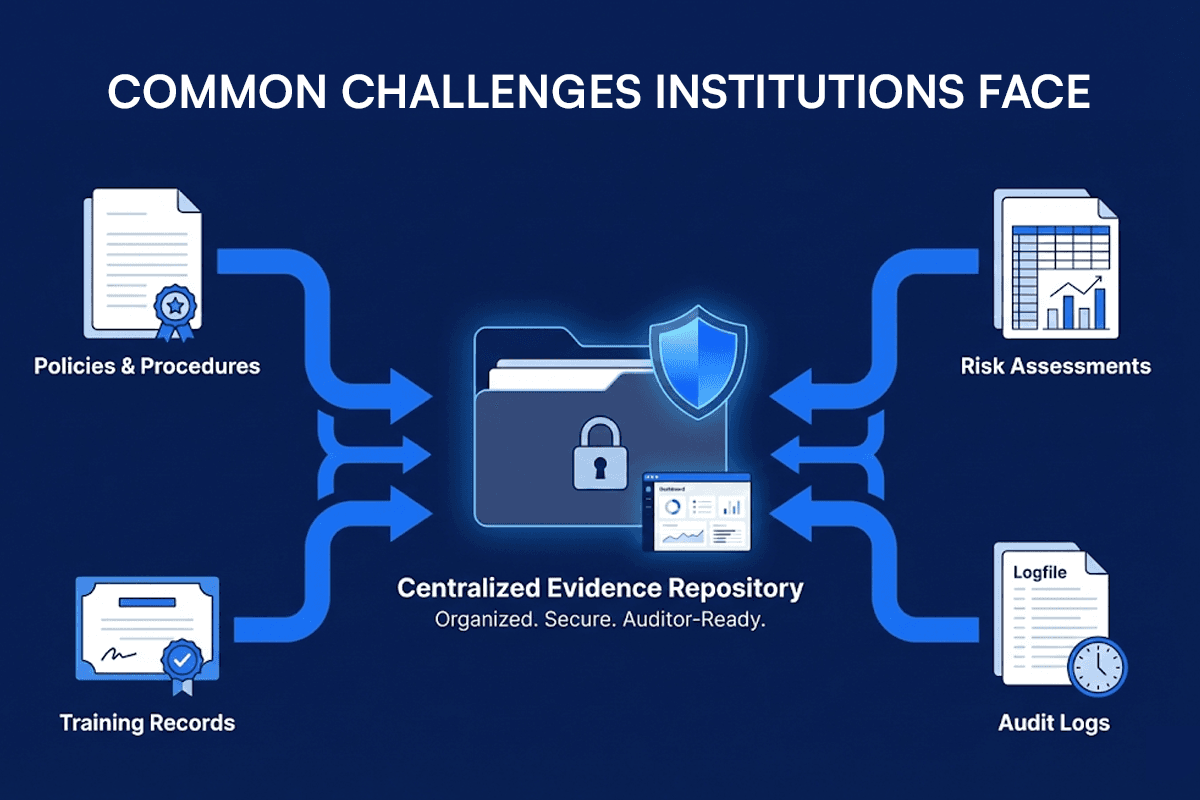
The Profile relies on self-attestation. Clear documentation, ownership, and testing records are essential. Centralizing this evidence saves significant time later.
5. Conduct internal assessments
Each diagnostic statement is reviewed and scored. The goal is not perfection, but honest visibility into strengths and weaknesses.
6. Prioritize remediation
Not all gaps are equal. Focus first on issues with the highest impact and likelihood, then build improvement plans over time.
Common challenges institutions face
Even though the Profile simplifies alignment, it is not effortless. Large institutions often struggle with coordination across business units. Smaller teams may find documentation demands heavy. The outcome-based nature of the framework also requires interpretation, which can feel uncomfortable for teams used to prescriptive checklists.
This is where experienced external validation becomes valuable. Independent testing and structured assurance help ensure that what is documented actually reflects real-world resilience.
At Capture The Bug, our role is to help institutions validate their security posture in a way that supports these frameworks, not replace them. Strong frameworks need strong evidence behind them.

Why this matters beyond compliance
The real value of the Cyber Risk Institute Profile is not passing an assessment. It is clarity.
It gives boards a clearer view of cyber risk. It gives regulators a consistent reference point. And it gives security teams a defensible way to explain why their controls make sense for their institution.
In an environment where trust is everything, that clarity is strategic.
Conclusion
Cyber risk in financial services is no longer about ticking boxes. It is about proving resilience, governance, and proportional decision-making.
The Cyber Risk Institute Profile offers a practical way to do that without multiplying effort. For institutions willing to approach it honestly, it becomes more than a framework. It becomes a common language for security, risk, and leadership.
FAQ
What is the Cyber Risk Institute Profile?
It is a cybersecurity framework designed specifically for financial institutions to harmonize regulatory expectations across regions.
Is alignment mandatory?
No. However, it is increasingly used as a reference point in regulatory and supervisory discussions.
How does it differ from older tools?
It is globally oriented, scalable by impact, and designed to reduce duplication across standards.
Can smaller institutions use it?
Yes. The tiered model ensures requirements scale based on systemic impact.
Does it replace other frameworks?
No. It complements them by providing a unified way to map and explain existing controls.