HIPAA Compliance: Essential Security Requirements for Healthcare Organizations
Healthcare organizations face increasingly complex cybersecurity challenges while maintaining strict compliance with the Health Insurance Portability and Accountability Act (HIPAA). With significant updates to HIPAA requirements in 2025, including mandatory multi-factor authentication and enhanced encryption standards, organizations must adopt comprehensive security strategies that protect patient data while meeting evolving regulatory expectations.
Understanding HIPAA's Core Requirements
HIPAA compliance centers on protecting Protected Health Information (PHI) and electronic PHI (ePHI) through five fundamental rules that organizations must implement comprehensively.
The Privacy Rule establishes patient rights over their health information and restricts how PHI can be shared. Healthcare organizations must designate privacy officers, develop written policies, provide patient access to their data, and implement strict protocols for third-party disclosures. The 2025 updates include new attestation requirements before sharing reproductive health information.
The Security Rule mandates administrative, physical, and technical safeguards to protect ePHI. Organizations must conduct regular risk assessments, implement access controls based on job functions, provide workforce training, and maintain secure premises with device security protocols. Recent updates require mandatory encryption for all ePHI and multi-factor authentication across all access points.
The Breach Notification Rule requires organizations to notify affected individuals promptly, report to Health and Human Services within 60 days, and inform media for large-scale breaches. This rule emphasizes rapid response capabilities and comprehensive incident documentation.
The Omnibus Rule extends compliance requirements to business associates, mandating Business Associate Agreements (BAAs) with all vendors handling PHI. This creates shared liability and requires comprehensive vendor risk management.
The Enforcement Rule establishes internal compliance programs for investigating violations and addressing non-compliance. Maximum annual penalties have increased to $2.1 million per category, with potential criminal charges carrying up to 10 years imprisonment for willful PHI misuse.

2025 HIPAA Updates and Enhanced Requirements
The Department of Health and Human Services has implemented significant updates that fundamentally change compliance requirements. Mandatory Multi-Factor Authentication now applies to all systems accessing ePHI, eliminating previous exceptions for low-risk scenarios. Organizations must implement MFA across all access points, including administrative systems, clinical applications, and remote access solutions.
Enhanced Encryption Requirements mandate encryption for all ePHI both at rest and in transit, with limited exceptions requiring specific risk assessments and alternative safeguards. Organizations must implement end-to-end encryption for data transmission and storage encryption meeting current federal standards.
Stricter Risk Assessment Standards require more comprehensive and frequent evaluations of security vulnerabilities. Organizations must conduct annual risk assessments with detailed documentation of identified risks, implemented safeguards, and ongoing monitoring procedures.
Updated Breach Notification Thresholds expand the definition of reportable incidents and reduce notification timeframes. Organizations must report potential breaches more quickly while maintaining detailed incident logs and remediation documentation.
Administrative Safeguards and Governance
Effective HIPAA compliance requires robust administrative controls that establish security governance throughout the organization. Security Officer Designation requires appointing qualified individuals responsible for developing and implementing security policies. These officers must have appropriate authority and resources to ensure comprehensive compliance.
Workforce Training and Access Management mandates comprehensive security awareness programs covering HIPAA requirements, incident response procedures, and emerging threats. Organizations must implement role-based access controls that limit ePHI access to minimum necessary levels and regularly review user permissions.
Incident Response and Contingency Planning requires documented procedures for security incidents, data recovery, and business continuity. Plans must address various scenarios including cyberattacks, system failures, and natural disasters while maintaining compliance throughout recovery processes.
Regular Policy Review and Updates ensures policies remain current with regulatory changes and emerging threats. Organizations must document policy changes, communicate updates to staff, and validate implementation effectiveness through regular audits.
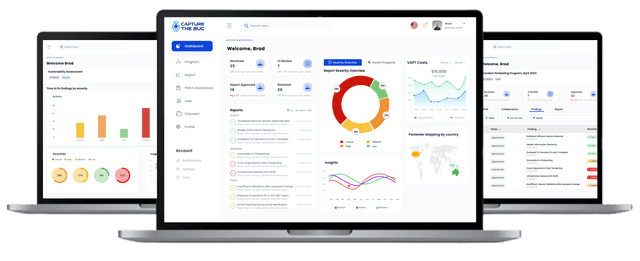
One platform to manage, track, and secure all your penetration tests.
Simplify your vulnerability management with Capture The Bug’s PTaaS platform where businesses and security experts collaborate seamlessly.
Physical and Technical Safeguards
Physical Security Controls protect the facilities, equipment, and media containing ePHI. Organizations must implement facility access controls, workstation use restrictions, and device and media controls that prevent unauthorized physical access. This includes secure disposal of devices, locked storage for physical records, and environmental controls protecting electronic systems.
Technical Safeguards focus on technology controls that protect ePHI during electronic transmission and storage. Access Control Systems must authenticate users, authorize access based on roles, and maintain audit logs of all system activities. Data Integrity Measures prevent unauthorized alteration or destruction of ePHI through checksums, digital signatures, and backup systems.
Secure Communications require encryption for all ePHI transmissions, secure email systems for PHI communications, and virtual private networks for remote access. Organizations must implement secure protocols that protect data during transmission while maintaining usability for healthcare operations.
Audit Logging and Monitoring systems must track all ePHI access attempts, system changes, and administrative activities. Logs must be reviewed regularly, stored securely, and maintained for appropriate retention periods to support compliance audits and incident investigations.
Business Associate Management
HIPAA's Omnibus Rule creates shared liability between covered entities and business associates, requiring comprehensive vendor risk management. Business Associate Agreements must specify permitted uses of PHI, required safeguards, breach notification procedures, and audit rights. Organizations must ensure BAAs cover all vendors with potential PHI access, including cloud providers, IT support companies, and third-party applications.
Vendor Risk Assessment requires evaluating business associates' security capabilities, compliance history, and risk management practices. Organizations must conduct due diligence reviews, validate security certifications, and monitor ongoing compliance performance. Regular assessments ensure vendors maintain appropriate safeguards throughout the relationship.
Third-Party Monitoring includes reviewing vendor security reports, conducting on-site assessments for high-risk partners, and validating incident response capabilities. Organizations must maintain visibility into business associate security practices and respond appropriately to identified deficiencies.
Penetration Testing and Vulnerability Assessment
Professional security testing has become essential for demonstrating HIPAA compliance effectiveness. Regular Penetration Testing validates security controls through real-world attack simulations that identify vulnerabilities automated tools might miss. Healthcare organizations should conduct comprehensive assessments covering network infrastructure, web applications, wireless systems, and medical devices.
Specialized Healthcare Testing addresses unique vulnerabilities in medical environments, including connected medical devices, patient portal security, and electronic health record system protection. Testing must consider clinical workflows while maintaining patient safety and operational continuity.
Compliance-Focused Assessment aligns testing methodologies with HIPAA requirements, providing documentation that supports audit processes and regulatory reviews. Professional assessments identify specific compliance gaps and provide prioritized remediation recommendations.
Continuous Monitoring supplements periodic testing with ongoing vulnerability management, threat intelligence, and security monitoring. Organizations must implement automated systems that detect emerging threats while maintaining comprehensive audit trails for compliance documentation.
Risk Assessment and Management
HIPAA requires comprehensive risk assessments that identify threats to ePHI, evaluate current safeguards, and determine residual risks requiring additional controls. Threat Identification must consider various attack vectors including cybercriminals, insider threats, accidental disclosure, and system failures. Organizations must evaluate both technical and administrative risks across all systems handling PHI.
Vulnerability Analysis examines current security controls, identifies gaps in protection, and assesses the effectiveness of implemented safeguards. This includes reviewing access controls, encryption implementations, audit logging, and incident response capabilities.
Risk Mitigation Planning develops prioritized action plans addressing identified vulnerabilities. Organizations must balance security requirements with operational needs while ensuring patient care continuity. Mitigation plans must include timelines, responsible parties, and success metrics for measuring implementation effectiveness.
Experience Capture The Bug Platform
Streamline your security testing with our PTaaS platform. Collaborate with expert testers, track vulnerabilities, and secure your applications effortlessly.
Incident Response and Breach Management
Effective incident response requires predetermined procedures that enable rapid containment, assessment, and notification. Detection and Analysis systems must identify potential security incidents quickly and determine whether PHI has been compromised. Organizations must establish clear criteria for incident classification and escalation procedures.
Containment and Remediation procedures must stop ongoing breaches while preserving evidence for investigation. Response teams must coordinate with IT personnel, legal counsel, and executive leadership to ensure appropriate actions while maintaining compliance obligations.
Notification and Reporting requirements include patient notifications, regulatory reporting, and media communications for large breaches. Organizations must prepare notification templates, establish communication procedures, and maintain detailed documentation supporting compliance with notification timelines.
Frequently Asked Questions
FAQ: What are the most critical changes in 2025 HIPAA requirements?
The most significant changes include mandatory multi-factor authentication for all ePHI access points, enhanced encryption requirements for data at rest and in transit, and stricter risk assessment standards. Organizations must also comply with new attestation requirements for reproductive health information sharing and updated breach notification thresholds.
About Capture The Bug
Capture The Bug is New Zealand's home-grown PTaaS platform, combining CREST-certified expertise with continuous vulnerability management. Built for modern engineering teams, it delivers live dashboards, instant retests, and measurable assurance — replacing static reports with real-time visibility.
Learn more: capturethebug.xyz