CERT-In SBOM Guidelines 2025: What Fintech Companies Must Know
A practical playbook for fintech CTOs and CISOs to turn CERT-In's SBOM rules into an audit-ready advantage that closes deals and reduces payment risk.
Why This Matters Right Now
CERT-In's SBOM guidance in 2025 changes who regulators and customers hold accountable. If you run payments, wallets, lending, or customer-facing finance APIs, you are now being asked to prove what runs inside your stack and to do it in machine-readable form.
That shifts responsibility from vague vendor assurances to traceable evidence you can hand an auditor or a partner.
What CERT-In Actually Requires for SBOMs
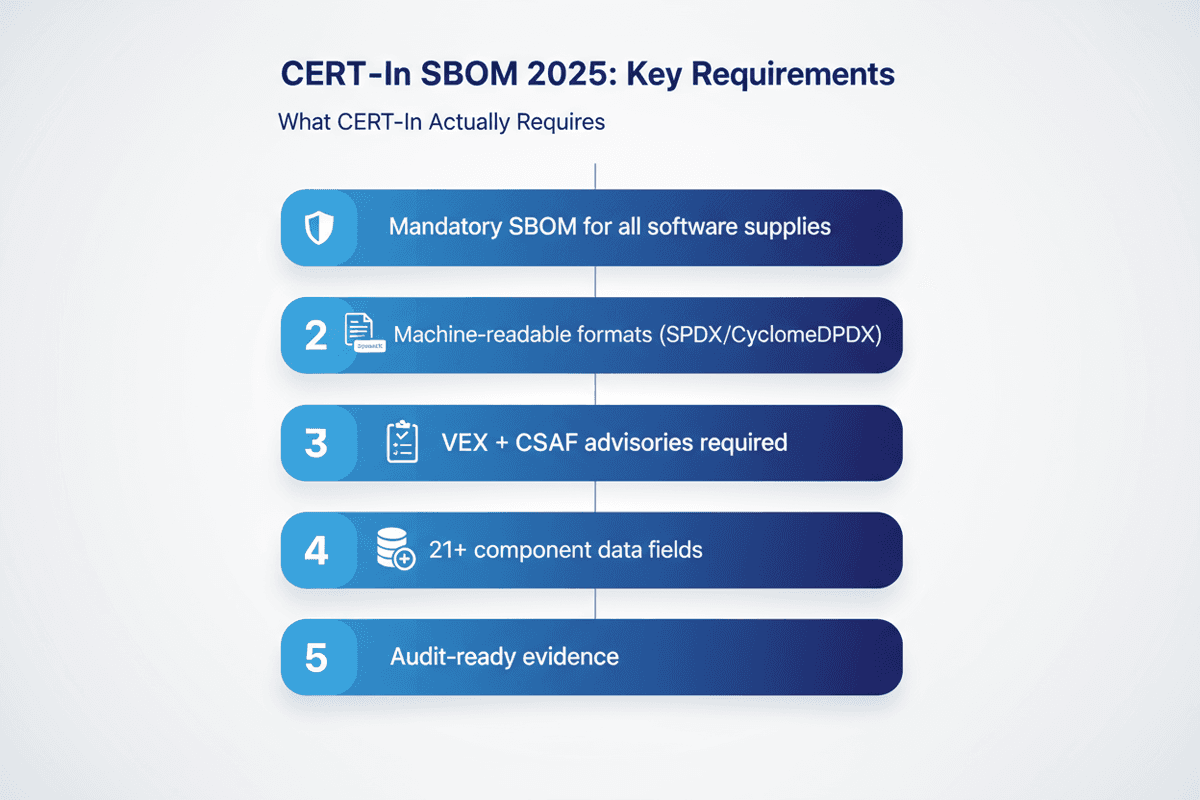
CERT-In expects complete, machine-readable inventories of components using industry formats such as SPDX or CycloneDX.
SBOMs must include vendor, version, license, checksums, EOL dates, dependency relationships, and a VEX status or CSAF advisory where applicable. Suppliers must deliver these as part of procurement and update them when components or releases change.
In practice that means procurement, engineering, security, and legal must coordinate from day one.
What Fintech Leaders Should Stop Doing
Stop treating SBOM as a one-off compliance document. Stop accepting PDFs as the final answer. Stop trusting vendor statements without unique identifiers and checksums.
SBOM is now evidence, not marketing copy.
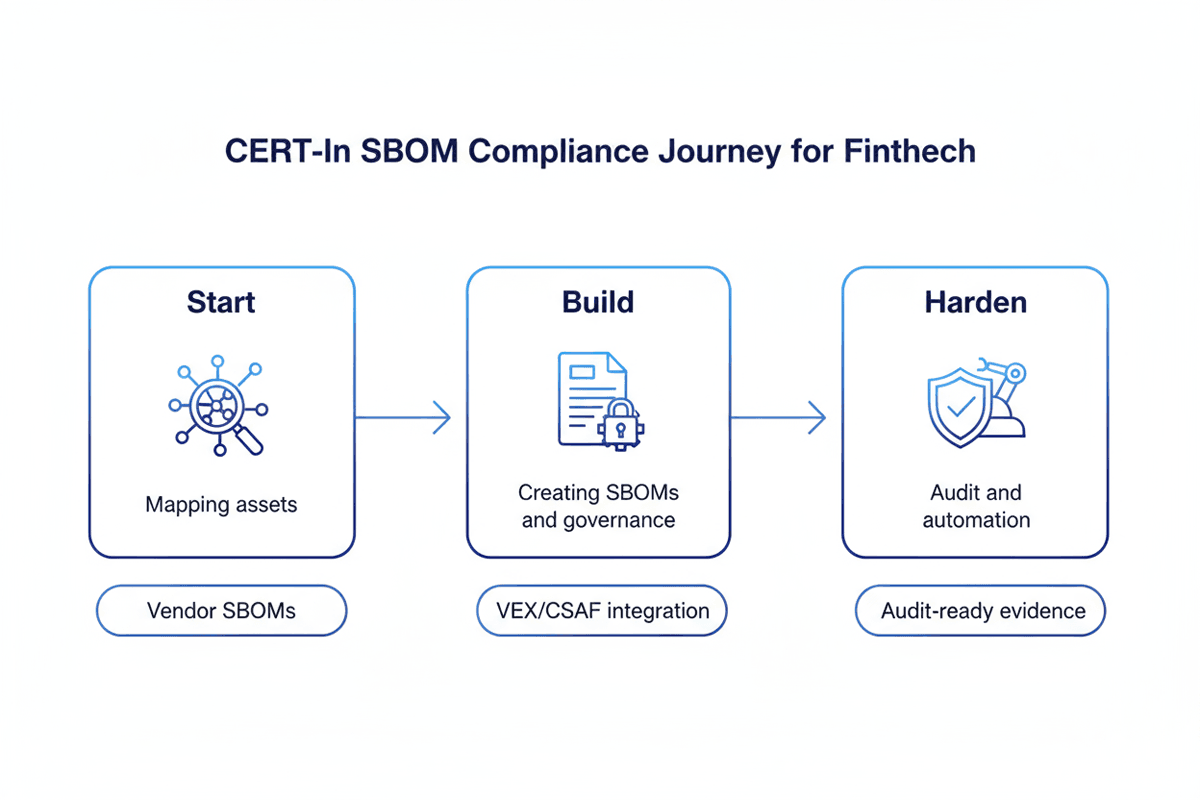
A Practical Implementation Roadmap for Fintech
Phase 1: Triage (0–90 days)
- Map high-impact assets first such as payment rails, customer-facing APIs, KYC systems, vaults, and any external payment connectors.
- Update procurement templates to require SPDX or CycloneDX SBOMs, signed and timestamped.
- Assign a single owner for SBOM audit evidence in each product area.
Phase 2: Build (3–9 months)
- Require vendors to provide SBOMs during onboarding and every major release. Add unique identifiers for every component and track EOL dates.
- Produce internal SBOMs that add runtime context such as configuration, deployed version, and criticality tags. Treat supplier SBOMs as input, not truth.
- Ingest CERT-In, NVD, and vendor advisories, and map them to your inventory so you know instantly who is affected.
Phase 3: Harden (9–18 months)
- Add signed SBOM generation into build and release artifacts so every release has a verifiable SBOM snapshot.
- Run regular validation and quarterly third-party audits to prove lineage and checksums.
- Make SBOM the first reference in incident response playbooks so you can answer impact questions immediately.
How to Structure SBOM Data for Audits and Enterprise Buyers
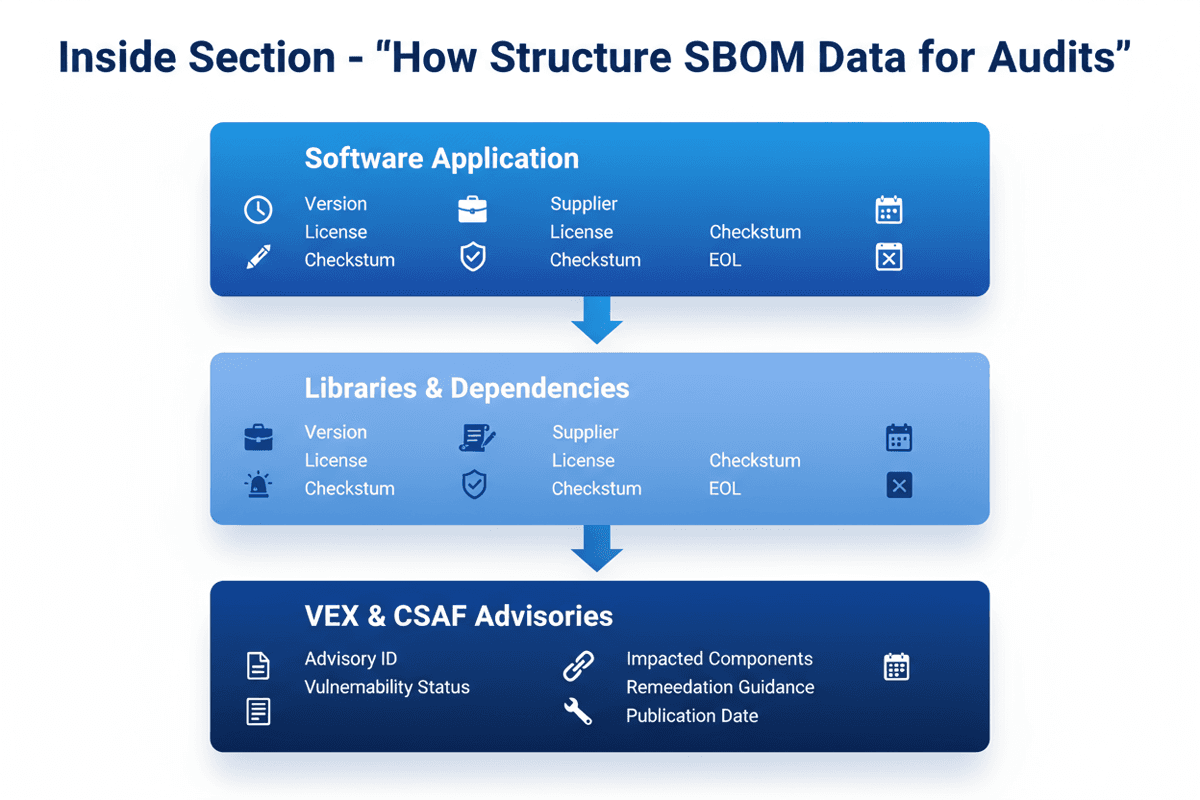
CERT-In lists 21+ fields for each component. Focus on producing these reliably:
Component name, version, supplier, license, origin, transitive dependencies, checksums, release date, end-of-life date, criticality, usage notes, unique identifier (PURL), timestamp, and whether the component is executable or archived.
Keep two views:
- An internal, complete SBOM that contains vulnerability and exploitability detail for engineering and security.
- A public or partner view that omits sensitive exploitability metadata but proves provenance and update cadence.
VEX and CSAF: How to Make Vulnerability Feeds Useful
CERT-In expects VEX documents and CSAF advisories to accompany SBOMs when vulnerabilities are identified. Use VEX to mark exploitability status, not every CVE means immediate action. This reduces noise and focuses engineering on what can actually be exploited in your environment.
Practical tip: insist vendors provide a VEX for any CVE they claim is not relevant. If they cannot, treat the component as affected until proven otherwise.
Specialized BOMs Fintech Cannot Ignore
Beyond the software SBOM, fintech teams should track these inventories in parallel:
- Cryptographic BOM (CBOM) lists keys, algorithms, certificates, and expiry. This is essential for payment flows and key management.
- Hardware BOM (HBOM) covers hardware security modules, switches, and ATMs, including firmware versions and vendor support windows.
- Model and data inventory for any fraud detection or scoring systems that process PII.
Document these as linked artifacts to your SBOM so auditors can follow the full chain from code to key to hardware.
Keeping SBOMs Accurate and Auditable
Accuracy is the hardest part. A few concrete controls that work:
- Generate signed SBOMs at build time and store immutable artifacts for each release.
- Verify supplier SBOMs by reconciling them with your runtime inventory and hashes. Do not accept a vendor SBOM as final without verification.
- Maintain an SBOM change log and require proof of fix for any remediation that affects cryptographic or payment-critical components.
- Schedule quarterly third-party validations and one annual in-depth supply-chain review.
Combining accurate SBOMs with independent tests builds the kind of audit evidence that closes enterprise contracts faster. Independent expert testing validates that the declared SBOM matches reality. If you need this human validation, consider a continuous testing partner that provides real-time verification and audit-ready reports. This approach shortens time-to-remediate and reduces evidence friction during audits.
RFPs, Contracts, and Vendor Scorecards
Change your RFP and contract templates now:
- Mandate SPDX or CycloneDX SBOM delivery and updates as contractual obligations.
- Require signed VEX or CSAF when vulnerabilities are found.
- Include SLAs for SBOM delivery timeframe after each release and penalties for late or incomplete delivery.
- Score vendors on SBOM completeness, update cadence, and ability to provide checksums and signed artifacts.
How SBOMs Reduce Real Business Risk
When a new CVE is published, a complete SBOM lets you answer two board-level questions in minutes: are we affected, and how fast can we fix it.
That speed reduces financial exposure, consumer fraud risk, and regulator scrutiny. Accurate SBOMs also reduce due-diligence friction during enterprise sales and partnerships.
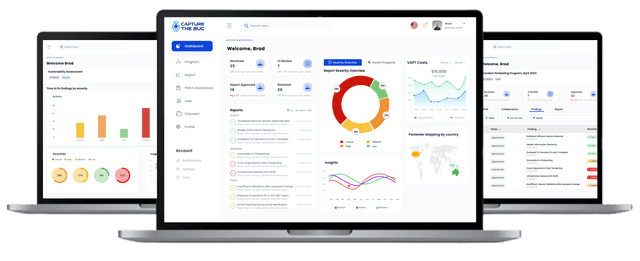
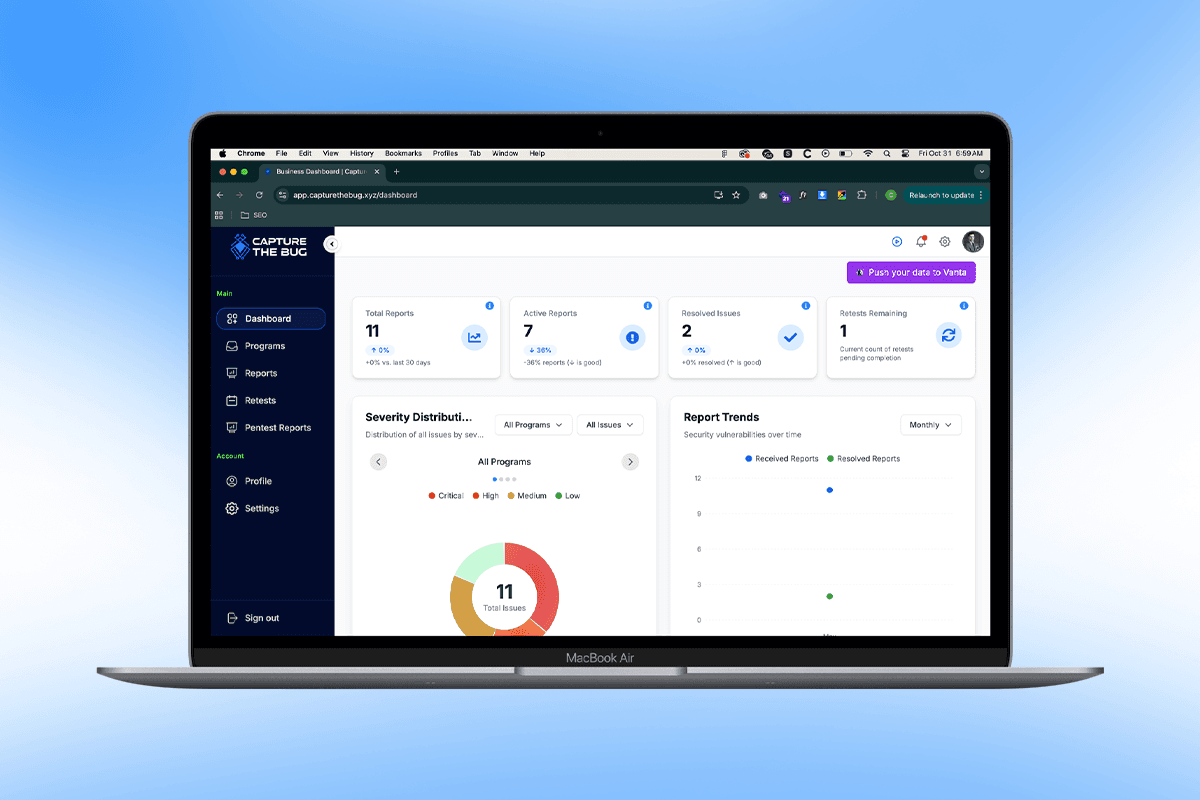
Experience Capture The Bug Platform
Streamline your security testing with our PTaaS platform. Collaborate with expert testers, track vulnerabilities, and secure your applications effortlessly.
Quick Checklist for Fintech CTOs and CISOs
- Map critical payment and customer-facing applications now.
- Require machine-readable SBOMs (SPDX or CycloneDX) in procurement.
- Add unique identifiers and checksums to every component.
- Maintain internal SBOMs with runtime context and criticality tags.
- Insist on VEX or CSAF for vulnerabilities and reconcile vendor claims.
- Combine SBOM proof with independent testing to create audit-grade evidence.
Final Thought
CERT-In's SBOM guidance is not a checkbox. It is a shift in trust, from trusting vendor statements to verifying the components that move money.
Fintechs that treat SBOM discipline as a business capability will not only make audits easier, they will reduce fraud, shorten remediation windows, and win enterprise deals where transparency matters.

Frequently Asked Questions
Q: Are PDFs acceptable as SBOMs for CERT-In compliance?
A: PDFs are fine for human review, but CERT-In expects machine-readable SBOM formats for operational use and exchange. Use SPDX or CycloneDX for automation and audit trails.
Q: Do third-party APIs require SBOMs?
A: Yes. Any third-party software, including APIs, must be inventoried. Require the vendor to supply an SBOM and VEX or CSAF for vulnerability status.
Q: What proves SBOM integrity?
A: Signed SBOM artifacts with cryptographic checksums and an immutable storage record. Reconcile those hashes with deployed runtime artifacts.
One platform to manage, track, and secure all your penetration tests.
Simplify your vulnerability management with Capture The Bug’s PTaaS platform where businesses and security experts collaborate seamlessly.