A Penetration Tester's Guide to Web Applications
Web applications sit at the center of modern business. Payments, customer data, internal tools, partner portals, and entire SaaS platforms now live behind a browser. That convenience is exactly why attackers focus there first.
At Capture The Bug, a CREST-certified Penetration Testing as a Service company working with teams across ANZ, the USA, and globally, web applications are where most real-world breaches begin. Not because teams do not care about security, but because web apps change constantly, and small mistakes compound fast.
This guide explains how professional penetration testers approach web applications, what they look for, how testing actually works in practice, and how security teams can get more value from the process.
No hype. No buzzwords. Just how it really works.
Why Web Applications Deserve Special Attention
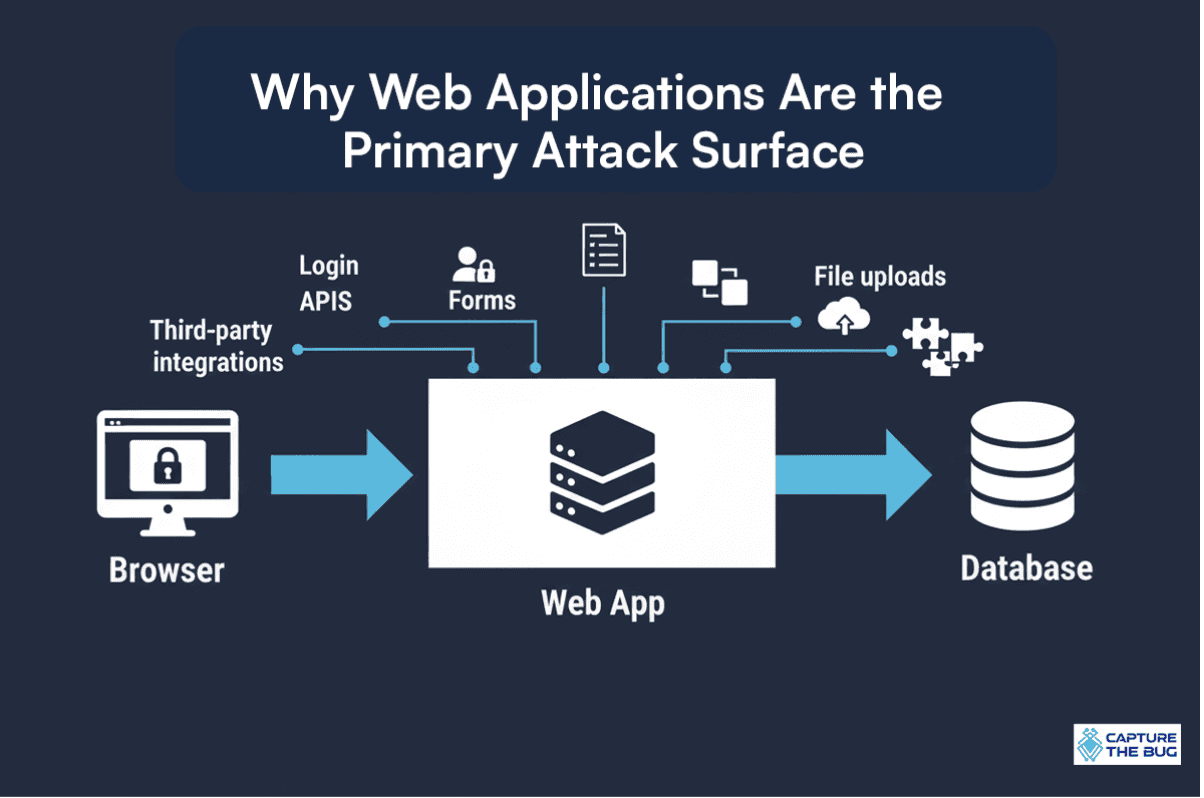
Web applications are exposed by design. Unlike internal systems, they must accept untrusted input from users, partners, browsers, and third-party services every second of the day.
Each form field, API endpoint, upload feature, login page, and integration becomes a potential entry point. As applications grow, so does the attack surface, often without teams realizing it.
Penetration testing focuses on answering one simple question:
If someone wanted to break in, where would they start and how far could they go?
For web applications, that question touches code, logic, access control, data handling, and configuration, not just one layer.
What a Web Application Penetration Test Actually Covers
A professional web application penetration test looks beyond surface-level issues. It examines how the application behaves under real-world misuse.
Key areas include:
- Authentication and session handling
- Authorization and role boundaries
- Input handling and data validation
- Business logic workflows
- File handling and uploads
- Third-party integrations
- Error handling and information exposure
This is not about checking boxes. It is about understanding how your application works and how that understanding could be abused.
Authenticated vs Unauthenticated Testing
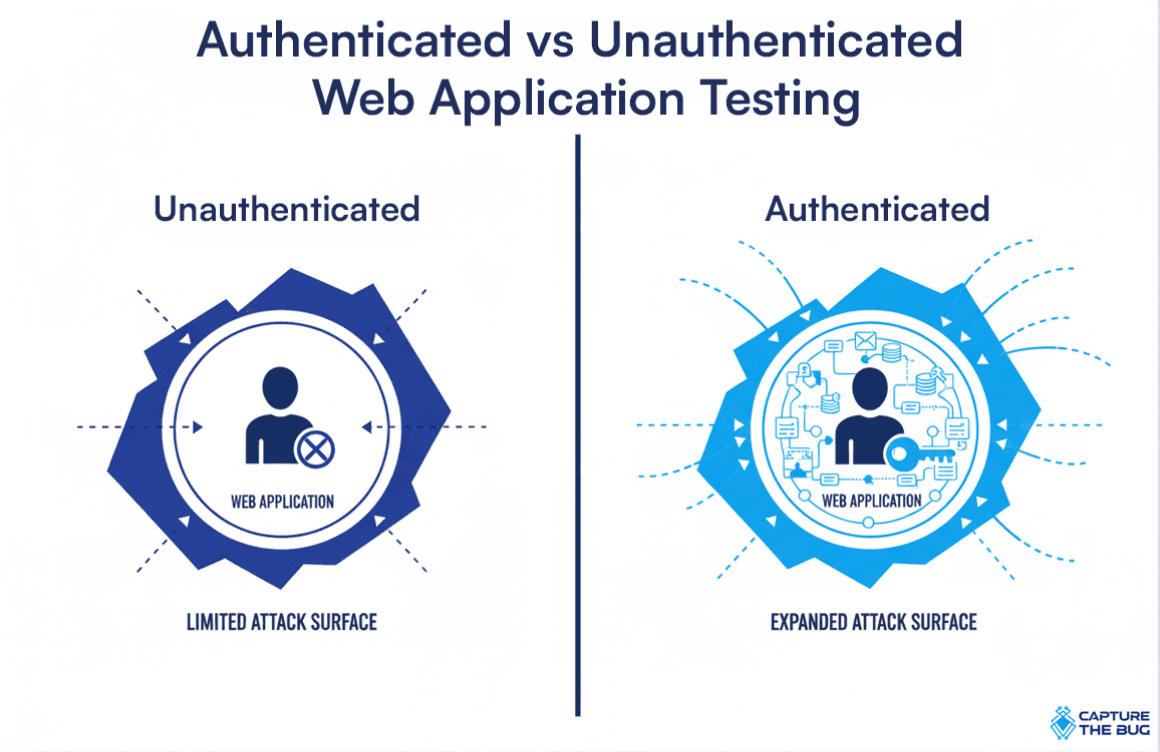
Web application testing typically happens in two modes. Both matter.
Unauthenticated Testing
This simulates an external attacker with no login access. The tester sees only what the public sees and attempts to move deeper.
This phase answers questions like:
- Can accounts be enumerated?
- Can authentication be bypassed?
- Are sensitive endpoints exposed publicly?
- Is data leaking through errors or responses?
Unauthenticated testing focuses on first entry. Many breaches start here.
Authenticated Testing
In this mode, testers receive valid credentials for one or more user roles.
This reveals a much larger attack surface and often uncovers more serious issues, such as:
- Users accessing data they should not see
- Privilege escalation paths
- Weak role separation
- Hidden administrative functions
Authenticated testing is essential for understanding real risk. Most damaging flaws live behind login screens.
How Professional Penetration Testers Approach Web Apps
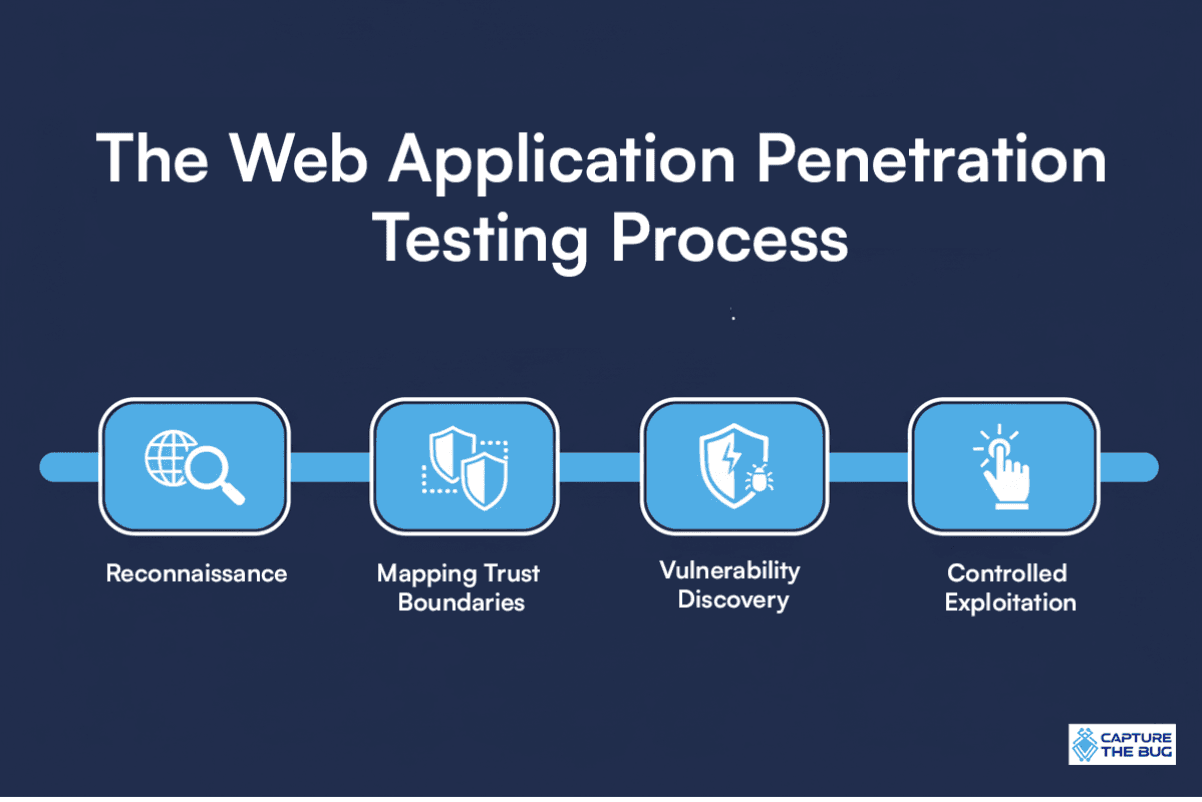
A strong penetration test follows a structured process, even though the testing itself is creative and adaptive.
1. Reconnaissance
This is about learning how the application works.
Testers map pages, flows, endpoints, and features. They observe how the app responds to unexpected input, unusual sequences, and edge cases.
This phase is quiet but critical. The quality of recon often determines the quality of the entire test.
2. Mapping Trust Boundaries
Every web application has assumptions about trust.
Who is allowed to do what?
Which actions require which permissions?
Testers deliberately try to cross those boundaries.
For example:
- Can a normal user perform an admin action?
- Can a user act on another user's data?
- Can a workflow be skipped or replayed?
Many real vulnerabilities are logic mistakes, not technical bugs.
3. Vulnerability Discovery
Here, testers probe deeper, using both manual techniques and targeted tooling.
Common vulnerability categories include:
- Injection flaws
- Cross-site scripting
- Broken access control
- Insecure file handling
- Weak session management
What matters is not the name of the issue, but the impact. Can data be accessed, modified, or destroyed?
4. Controlled Exploitation
Ethical penetration testing does not cause damage. Exploitation is controlled and purposeful.
The goal is to prove impact safely:
- Can sensitive data be accessed?
- Can accounts be taken over?
- Can actions be performed without permission?
Proof matters. It separates theoretical risk from real exposure.
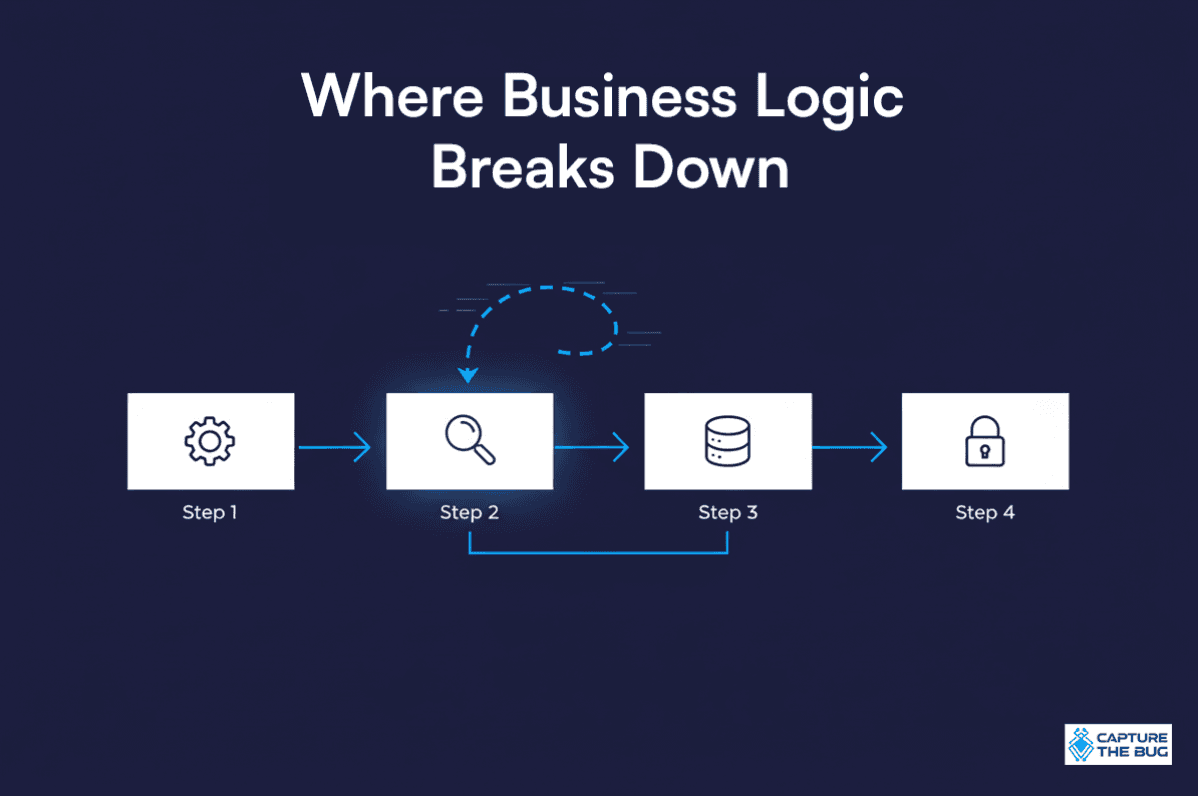
Why Business Logic Is the Hardest Part to Secure
Automated checks catch common mistakes. Business logic flaws do not follow patterns.
Examples include:
- Refunds issued multiple times
- Discounts stacked incorrectly
- Approval steps skipped
- Limits bypassed through sequence manipulation
These issues only appear when someone understands how the application is meant to work. That is why experienced human testers matter.
At Capture The Bug, many high-impact findings come from logic analysis, not technical trickery.
Reporting That Teams Can Actually Use
A penetration test is only as valuable as what happens after it.
Good reporting answers three questions clearly:
- What is the issue?
- Why does it matter?
- What should be done next?
Findings should be prioritised by risk, not volume. Engineers should understand exactly where the problem is and how to address it. Leadership should see overall exposure without needing to decode technical language.
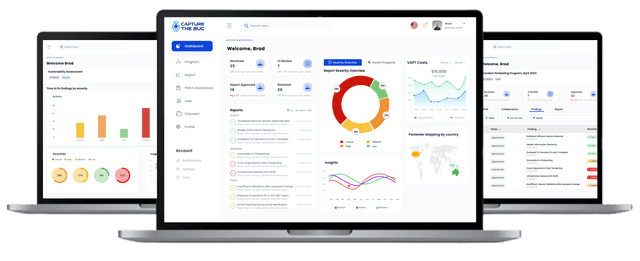
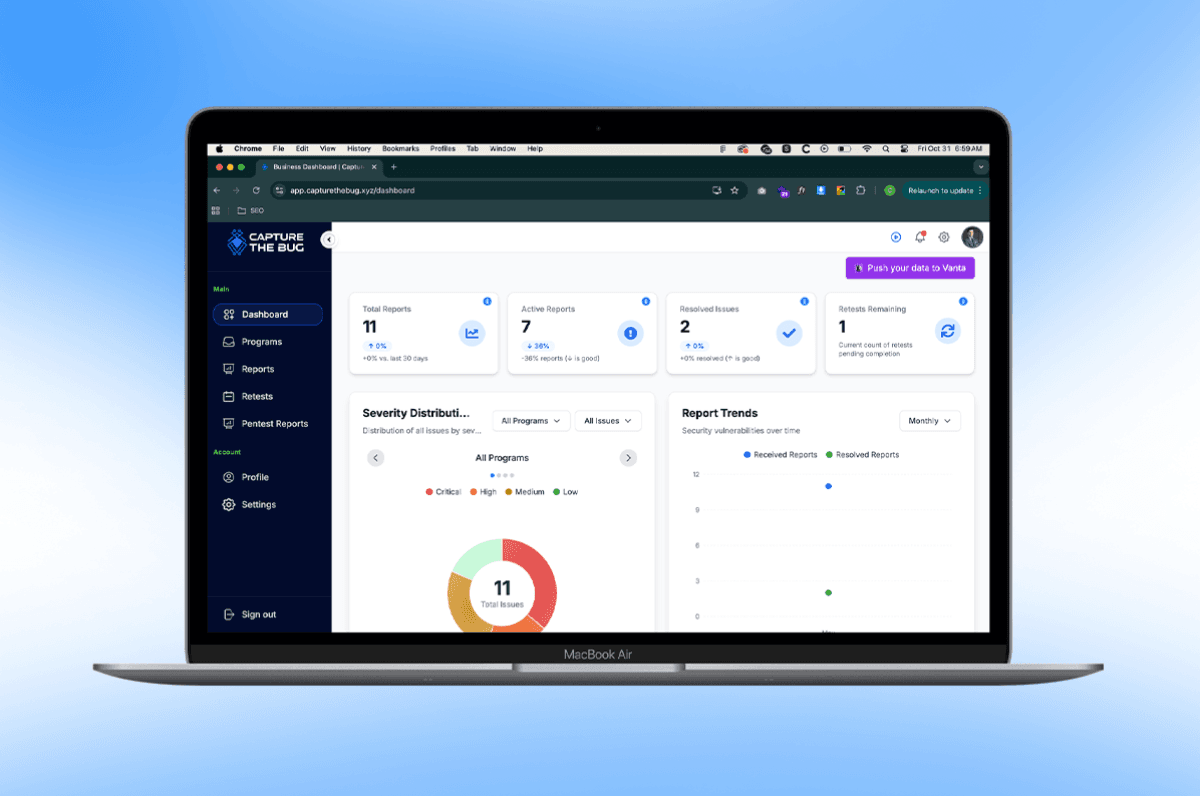
Real-time reporting platforms improve this process by allowing teams to act while testing is still happening, instead of waiting for a static document weeks later.
How Long Web Application Testing Takes
There is no single answer. Scope defines timing.
Factors include:
- Application size and complexity
- Number of user roles
- Depth of business logic
- Testing mode selection
Most focused web application tests run from several days to two weeks. What matters more than speed is clarity. Rushed testing misses nuance. Thoughtful testing finds what actually matters.
Common Mistakes Teams Make With Web App Security
Over the years, the same patterns appear repeatedly.
- Treating security as a once-a-year task
- Focusing only on compliance requirements
- Ignoring authenticated testing
- Fixing symptoms instead of root causes
- Not retesting after changes
Security improves when testing becomes part of how teams build, not an interruption.

The Real Goal of Web Application Penetration Testing
Penetration testing is not about proving failure. It is about reducing uncertainty.
A good test gives teams confidence that:
- Known risks are understood
- Unknown risks are less likely
- Fixes are effective
- Future changes can be tested quickly
For modern web applications, especially SaaS platforms, that confidence needs to be ongoing.
Final Thoughts
Web applications are living systems. They grow, change, and evolve every week. Security must keep pace.
A professional penetration tester's job is not to break things for sport, but to help teams see their applications the way attackers do, before attackers arrive.
At Capture The Bug, web application testing is treated as a partnership. Clear communication, real insight, and practical outcomes matter more than jargon or volume.
If your web application matters to your business, understanding how it is tested is no longer optional. It is part of building trust at scale.
FAQ
What is a web application penetration test?
It is a controlled security assessment that simulates real-world attacks against a web application to identify weaknesses before attackers do.
Why is authenticated testing important for web applications?
Because many serious vulnerabilities exist behind login areas, including access control and business logic issues.
How often should web applications be penetration tested?
Any time significant changes are made, and regularly for applications that handle sensitive data or customer access.
Does penetration testing replace secure development practices?
No. It complements them by validating real-world exposure and finding issues missed during development.
Who should review penetration test results?
Engineering teams, security leaders, and decision-makers should all understand the findings at their respective levels.