
How Often Should You Do Penetration Testing in 2026
The Old Question vs The New Reality
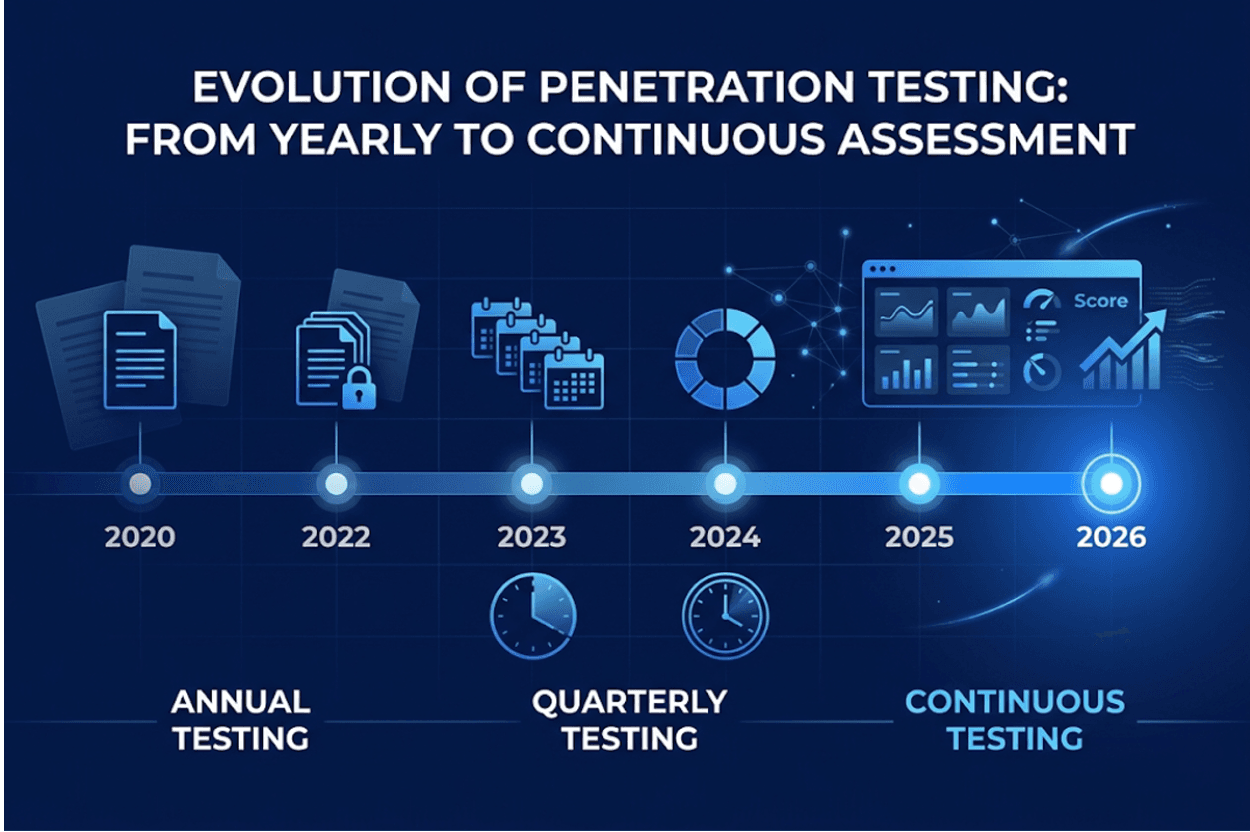
For years, companies asked a simple question
“How often should we do penetration testing”
The standard answer used to be once a year
Maybe twice if you were serious about compliance
But that answer no longer reflects how modern businesses operate
Today’s SaaS platforms, fintech products, and cloud environments change constantly
New features ship weekly
Integrations expand monthly
Attack surfaces evolve daily
And that changes everything
Because testing once a year only tells you one thing
What your security looked like in the past
Not what it looks like right now
Why Annual Testing Is No Longer Enough
Traditional penetration testing still has value
But relying on it alone creates blind spots
Think of it like a health check
You might be healthy today
But that doesn’t guarantee you will be healthy six months later
The same applies to security
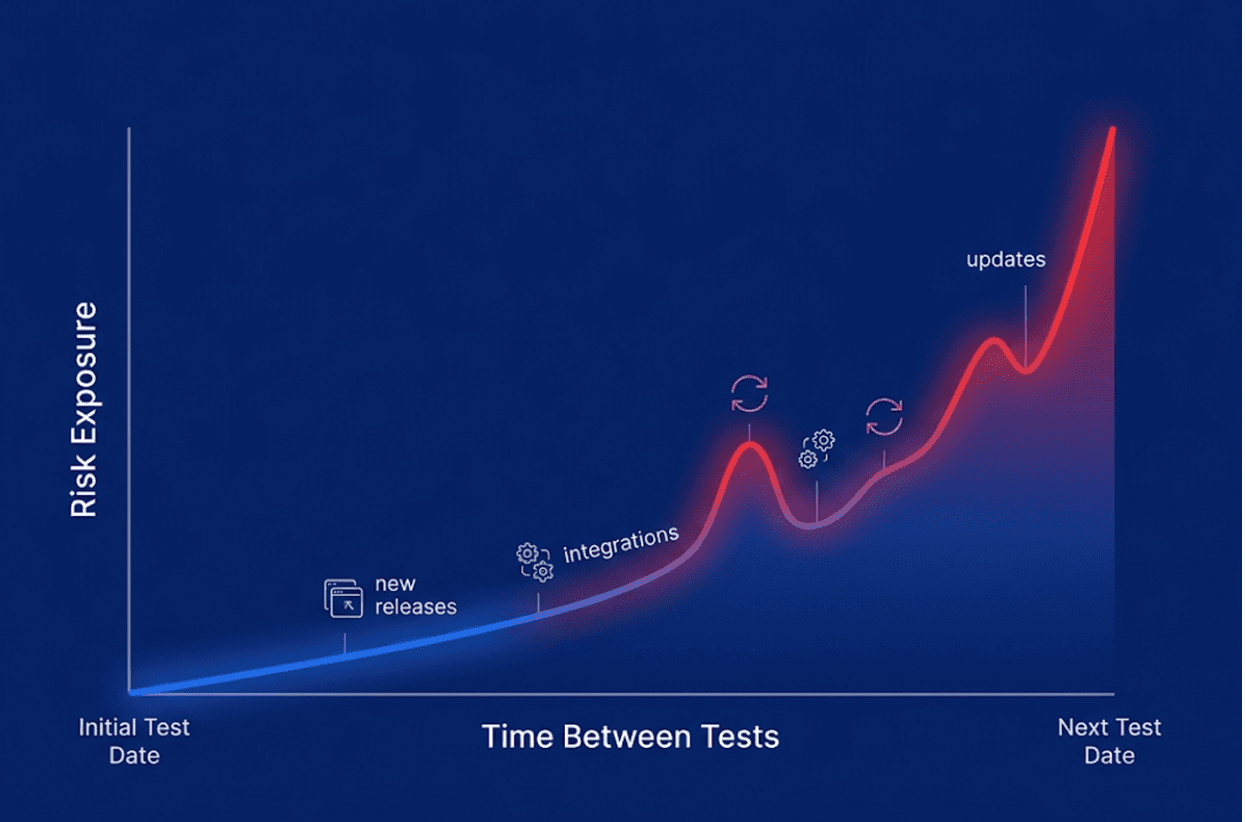
Between two yearly tests, your system might go through:
- New feature releases
- Third party integrations
- Infrastructure changes
- Access control updates
Each of these can introduce new vulnerabilities
And attackers are not waiting for your next test cycle
This is exactly why modern testing models have evolved
From scheduled testing to continuous validation
So, How Often Should You Test in 2026
The honest answer is
It depends on your risk, growth speed, and compliance needs
But there are clear benchmarks that leading companies now follow
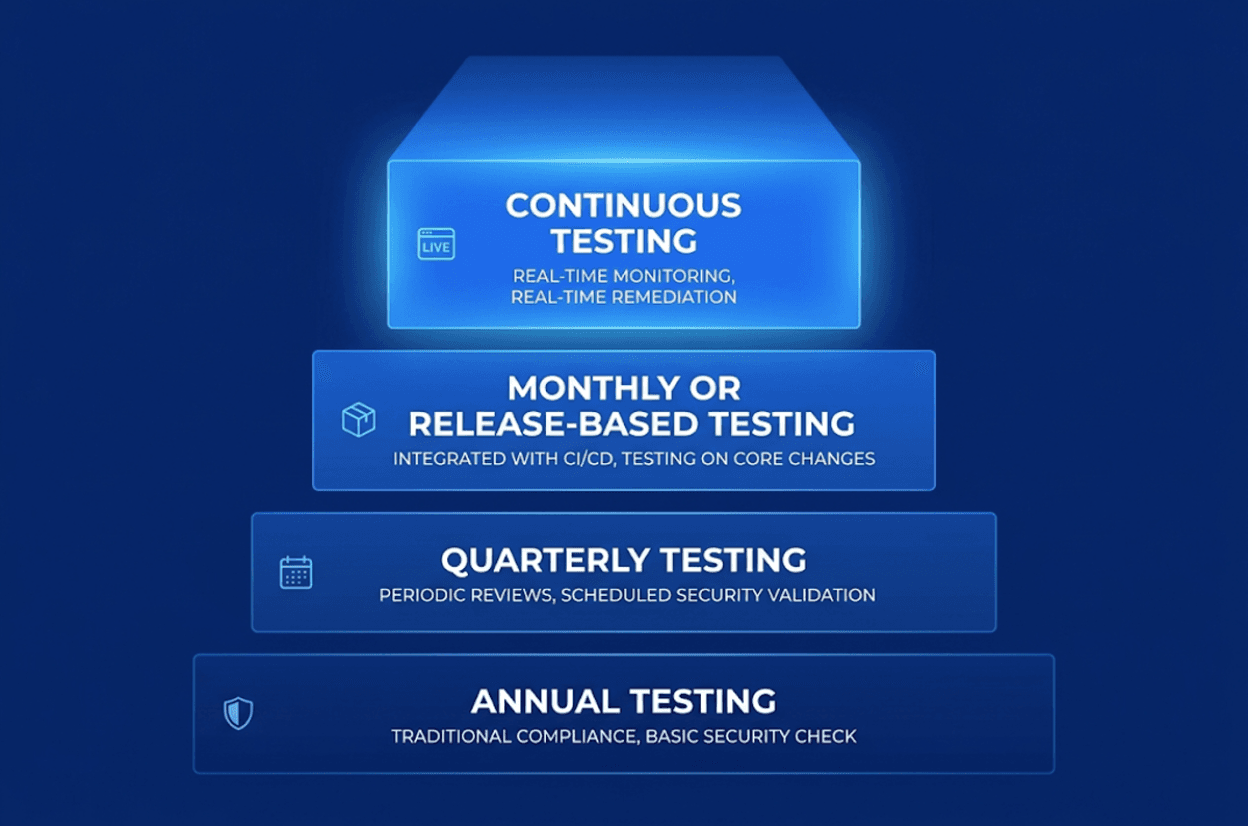
1. Minimum Standard
At least once per year
This is still the baseline for compliance frameworks like SOC 2 or ISO 27001
If you are only testing once a year, you are meeting compliance
But not necessarily reducing real risk
2. Growing SaaS or Tech Companies
Every quarter
If your product changes regularly, quarterly testing becomes essential
It helps catch vulnerabilities introduced between releases
But even this has a limitation
You are still reacting after changes happen
3. High Growth or Funded Startups
Monthly or release based testing
If your team is shipping frequently, testing should follow your release cycle
New features should be tested before or immediately after launch
This is where many modern teams are moving
4. Mature Security Programs
Continuous testing
This is where 2026 is heading
Instead of asking how often
The question becomes
How quickly can you detect and fix vulnerabilities
Continuous testing answers that
The Shift from Frequency to Timing
The biggest mindset shift is this
Security is no longer about frequency
It is about timing
It is not about testing every 3 months
It is about testing when it matters most
That includes:
- Before major releases
- After infrastructure changes
- During compliance audits
- When integrating third party services
- And ideally
- All the time
This is why many organizations are moving toward a continuous testing model instead of fixed schedules
What Continuous Testing Actually Looks Like
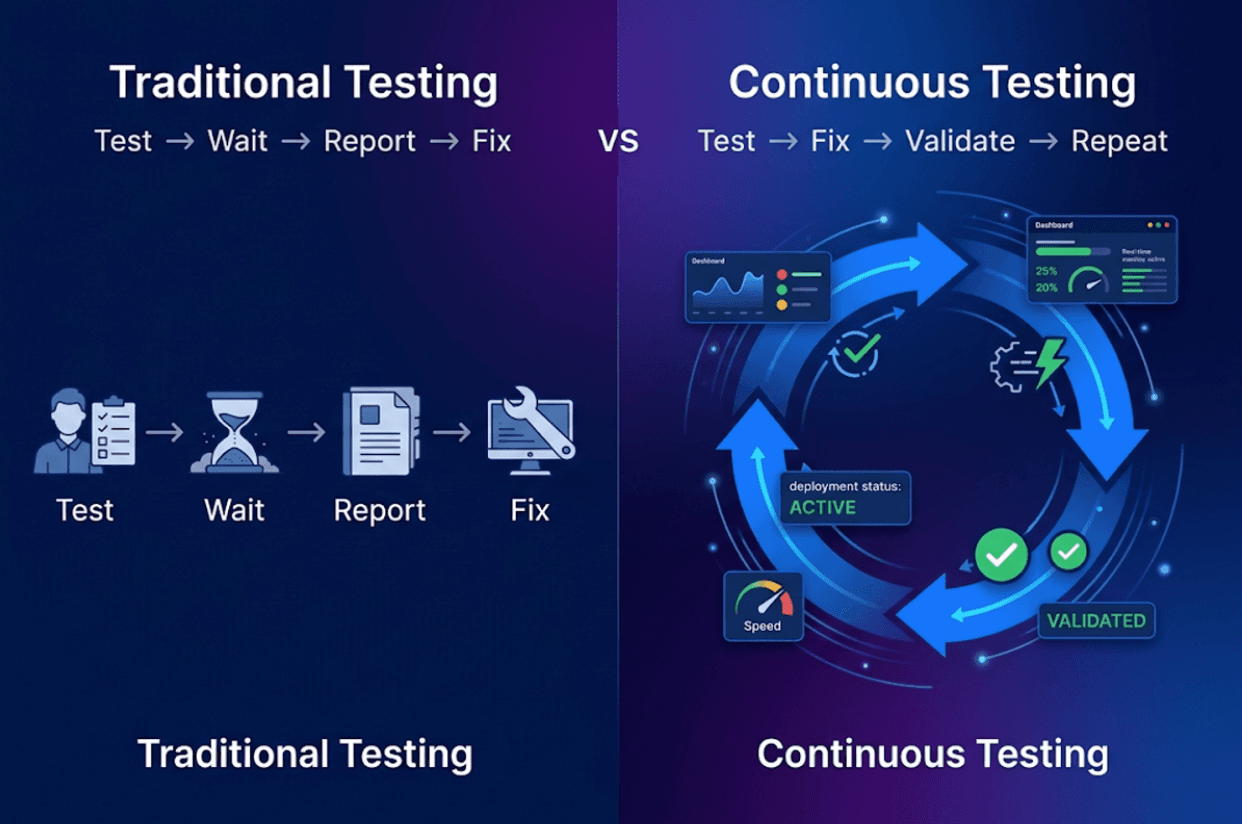
Continuous testing does not mean random testing happening all the time
It means structured, ongoing validation aligned with your business
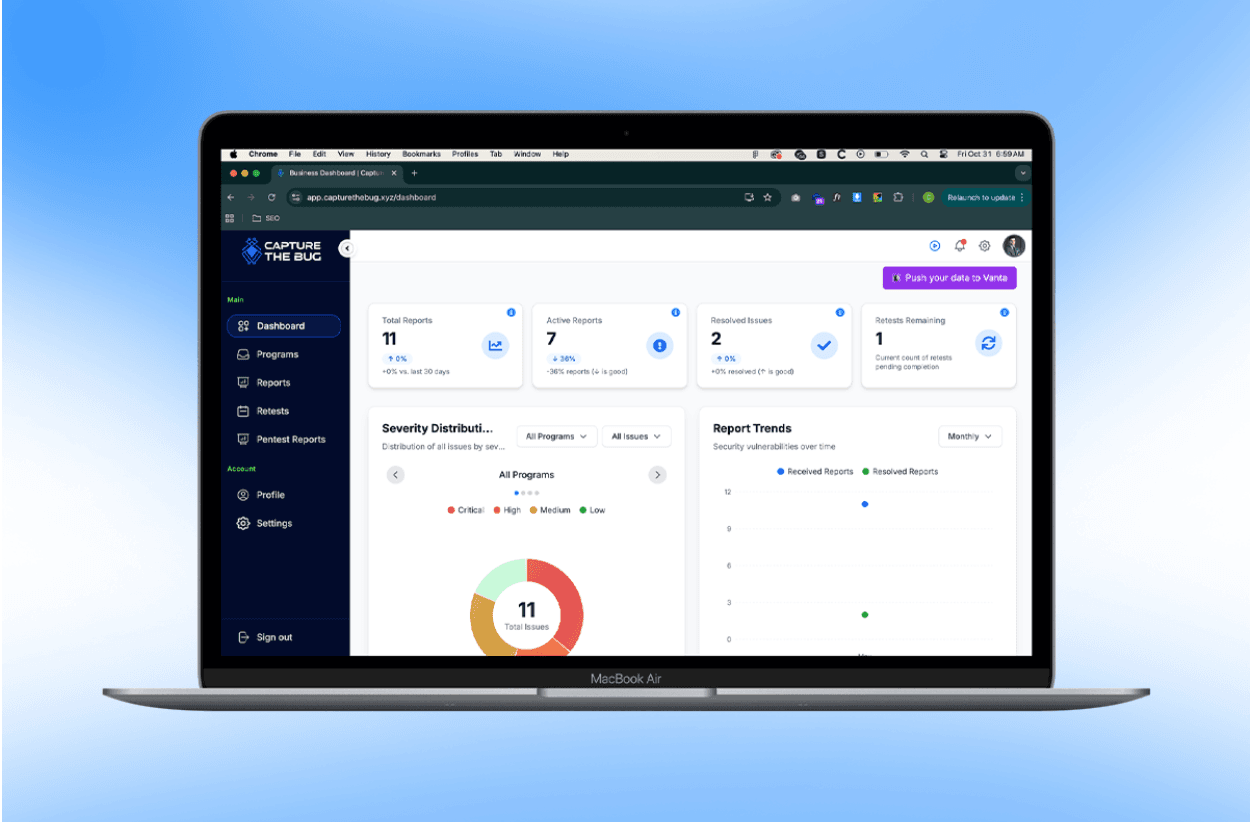
In a modern PTaaS model like Capture The Bug:
- Testing can be launched anytime
- Results appear in real time
- Fixes are verified immediately
- Progress is tracked continuously
Instead of waiting weeks for a report
Teams act on issues as they are discovered
That removes the biggest gap in traditional testing
The delay between finding and fixing
A Real Scenario Most Companies Face
A SaaS company completes its annual penetration test in January
Everything looks secure
By March, they release new features
In April, they add third party integrations
In June, they update authentication flows
By July, the system is very different from what was tested
But the next test is scheduled for next year
That means six to nine months of untested changes
This is where most real world risks live
Not in what was tested
But in what changed after
The Cost of Testing Too Infrequently
Testing less often might seem cost effective
But it creates hidden costs
Longer vulnerability exposure
Higher risk of breach
Expensive incident response
Delayed compliance readiness
In contrast, more frequent testing spreads cost over time and reduces risk significantly
This is one of the key advantages of a continuous model
You reduce the gap between detection and remediation
How Capture The Bug Approaches Testing Frequency
Capture The Bug does not treat penetration testing as a one time event
It treats it as an ongoing process aligned with how your business operates
With its PTaaS approach, companies can:
- Test new features on demand
- Validate fixes instantly
- Maintain real time visibility into vulnerabilities
- Stay audit ready at any moment
Instead of choosing between speed and security
You align both
For companies scaling across ANZ and the USA, this model ensures security keeps pace with growth
To understand how this works in practice, explore the platform here
https://capturethebug.xyz/services/penetration-testing
And for teams looking to move beyond static testing cycles
https://capturethebug.xyz/services/penetration-testing
When Should You Increase Testing Frequency
There are clear signals that your current testing frequency is not enough
You release features frequently
You rely on APIs or third party integrations
You struggle to track vulnerabilities between tests
You face continuous compliance requirements
You cannot answer your current security posture in real time
If any of these apply, annual testing is no longer sufficient
The Smart Approach in 2026
The best companies are not choosing a single frequency
They are combining multiple layers
- Annual testing for compliance
- Quarterly validation for structured reviews
- On demand testing for releases
- Continuous testing for real time assurance
This layered approach ensures both compliance and real security
Final Thoughts
The question is no longer
How often should we test
The real question is
How long are we comfortable being untested
In 2026, security is defined by speed
How fast you find issues
How fast you fix them
How clearly you can prove it
Companies that still rely only on yearly testing are working with outdated assumptions
Modern businesses need continuous visibility, faster validation, and real time confidence
That is exactly what Capture The Bug delivers
A practical, transparent, and continuous way to stay secure as your business evolves
Understand the Difference That Impacts Your Risk
Compare traditional penetration testing vs continuous testing and see which model actually protects your business in real time.

FAQ
1. How often should penetration testing be done in 2026
At minimum once a year for compliance, but most modern companies test quarterly or continuously based on release cycles and risk exposure
2. Is annual penetration testing enough
It meets compliance requirements but does not provide continuous security coverage for rapidly changing systems
3. What is the best frequency for SaaS companies
Monthly or release based testing combined with continuous validation is considered best practice
4. What is continuous penetration testing
It is an ongoing approach where vulnerabilities are identified, validated, and tracked in real time instead of through one time reports
5. How does Capture The Bug help with testing frequency
It enables on demand and continuous testing through a PTaaS model, allowing teams to test anytime and fix issues faster