Recent Cyber Attacks 2026: Major Incidents, Trends, and Business Impact
Cyber attacks in 2026 no longer feel shocking. They feel expected. Across ANZ, the USA, and global markets, Capture The Bug sees the same pattern. The conversation has shifted from surprise to survival. Leaders are no longer asking if an attack will happen. They are asking when it will occur, how disruptive it will be, and how long recovery will take.
One executive, reflecting on a major incident, described the weeks that followed as more painful than extreme physical injury. The operational chaos, legal pressure, regulatory scrutiny, and internal fallout left a deeper mark than the technical root cause. That sentiment is becoming common in 2026, as thousands of attacks occur every day and cybercrime losses reach into the trillions.
This article looks at what recent cyber attacks have in common, the dominant trends shaping this year, and what real world events from the past months reveal about where risk is headed next.
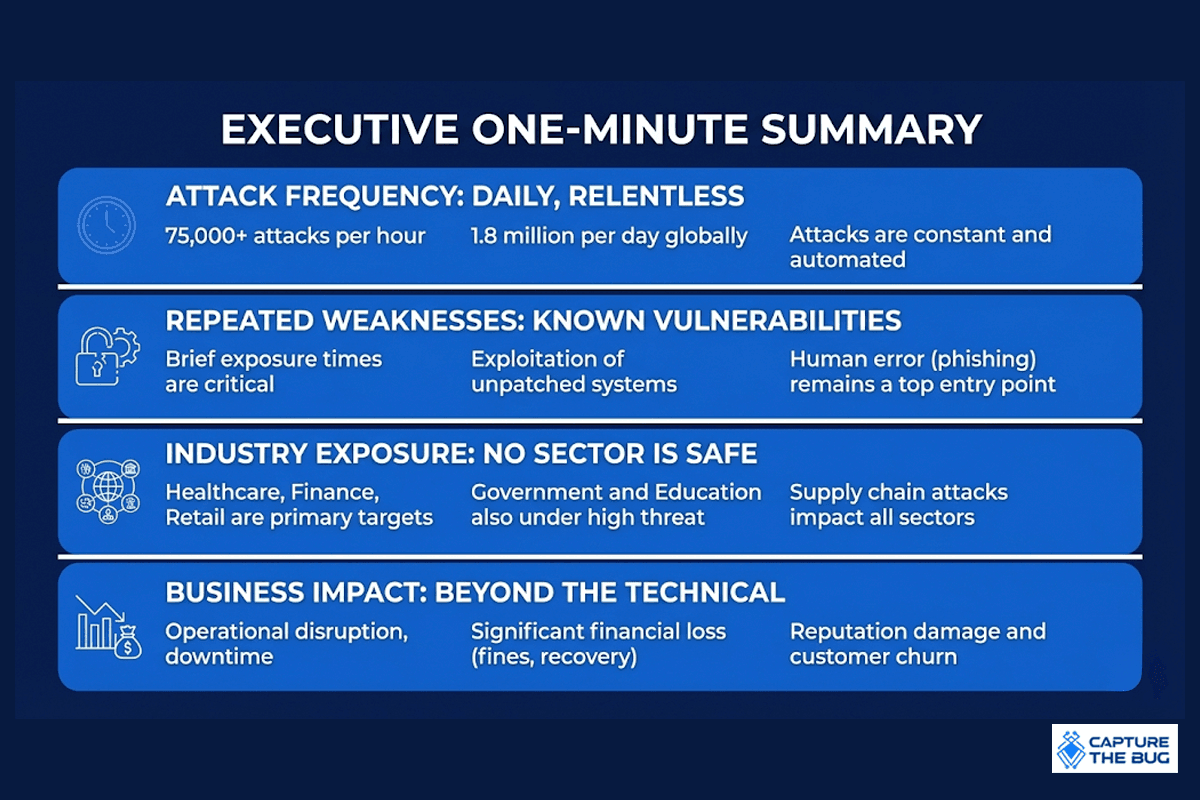
A One Minute Summary for Busy Leaders
If you only have a minute, these are the key realities behind recent cyber attacks in 2026.
- Cyber attacks are happening every minute, not every quarter.
- Most successful incidents exploit simple weaknesses left in place for weeks or months.
- Industries once seen as low risk are now regular targets.
- Recovery almost always costs more than prevention, in money and reputation.
- Organisations that assume attacks are inevitable recover faster and with less noise.
The Reality of Recent Cyber Attacks in 2026
In 2026, cyber attacks affect every type of organisation. Governments, healthcare providers, manufacturers, retailers, financial institutions, and educational bodies have all faced major incidents in recent months. The technical breach is rarely the only problem. The real damage comes from operational paralysis when systems go offline, services stop, and customers lose access.
One of the most striking examples from recent years involved a national government that operated under emergency conditions for months due to repeated attacks against public infrastructure. Tax systems, healthcare portals, and transportation services were all affected. The lesson was clear. Even sovereign entities with significant budgets are not immune.
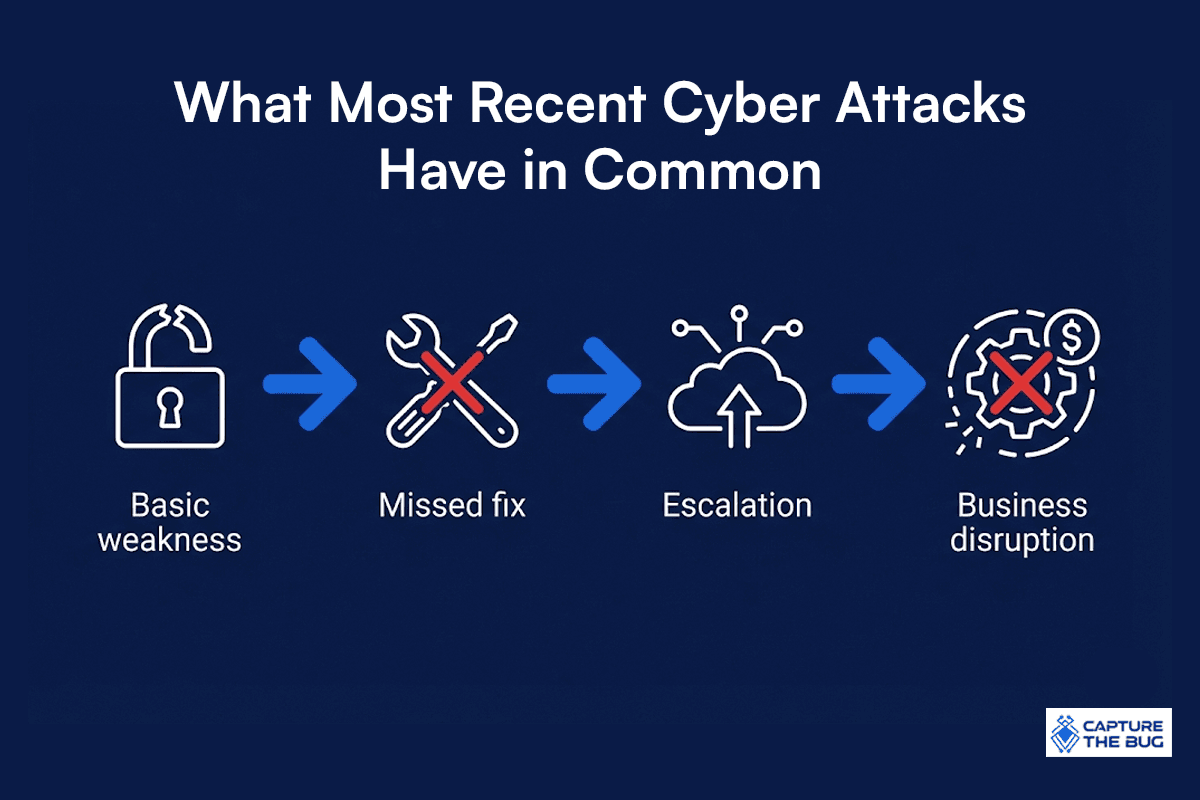
What Most Recent Cyber Attacks Have in Common
Despite differences in targets and motives, most cyber attacks in 2026 share familiar traits. They do not rely on exotic, unknown techniques. They exploit basics that were overlooked. Weak access controls and poor credential hygiene remain some of the most common entry points. Once inside, attackers often move laterally with little resistance.
Unpatched applications stay exposed long after fixes are available. Sensitive data still appears in responses where it does not belong. From Capture The Bug’s experience, many organisations underestimate how small issues combine into serious incidents. A low risk misconfiguration alone may seem harmless. Combined with another weakness, it can enable full system compromise. This pattern repeats across sectors and regions.

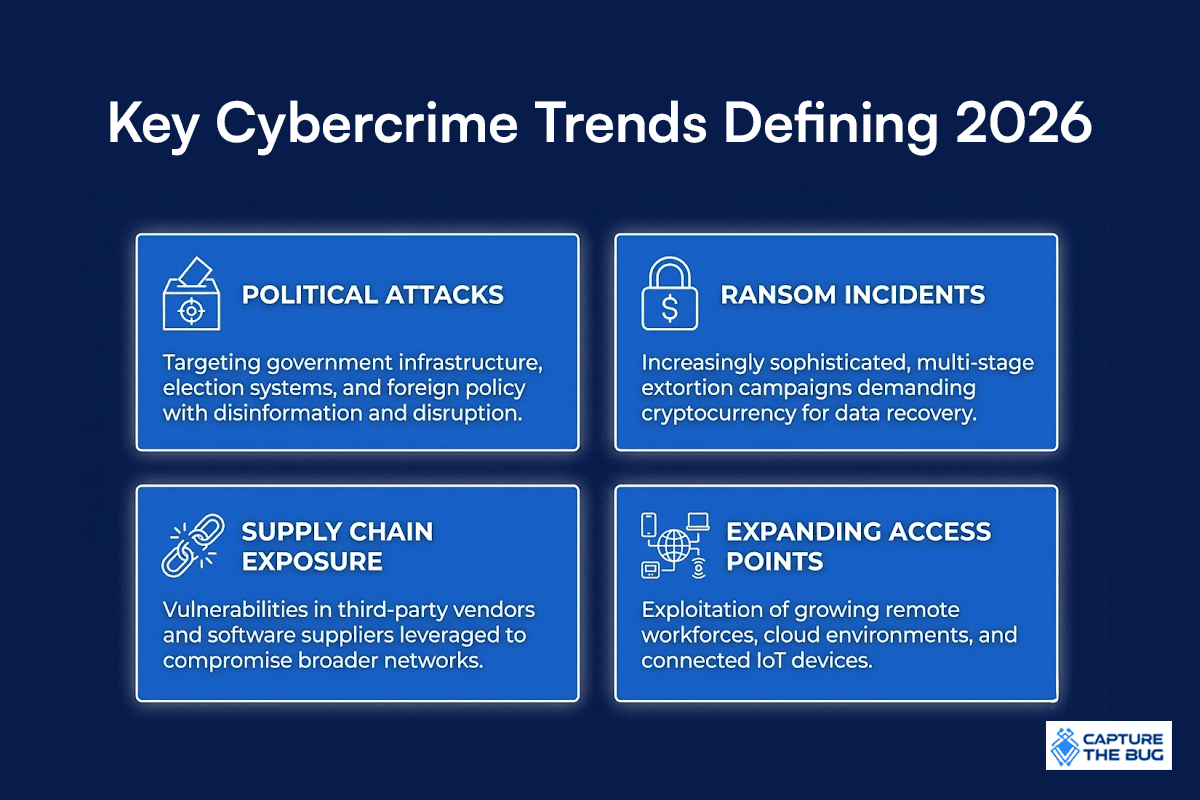
Key Cybercrime Trends Defining 2026
Several trends stand out when you look across recent incidents in 2026. Together they explain why risk continues to rise.
Politically motivated attacks are increasing
Geopolitical tension continues to spill into digital space. Government agencies and critical infrastructure are frequent targets, often not for financial gain but to disrupt operations and influence public confidence. These campaigns are persistent, well resourced, and designed to cause long term disruption.
Ransom based attacks remain dominant
Ransom attacks continue to be one of the most disruptive threats in 2026. Organisations face locked systems, halted operations, and the pressure of public exposure. These attacks no longer focus only on large enterprises. Mid sized businesses, healthcare facilities, and local authorities are regular victims.
Supply chain exposure is a major risk
Recent incidents have shown how one compromised vendor can impact hundreds or thousands of downstream organisations. As businesses rely on more third parties, they create extended trust relationships that are difficult to monitor. Attackers understand this leverage and continue to exploit it.
Expanding attack surfaces
As organisations adopt more connected systems and remote access models, the number of potential entry points grows. Each new integration introduces risk if not carefully managed. In 2026, visibility gaps remain one of the biggest challenges for leadership teams.
Notable Cyber Attacks from Recent Months
The past year has seen a steady stream of high impact incidents across industries. Healthcare organisations have experienced data exposure affecting millions of patient records. Financial institutions have faced service disruption that impacted customers across regions. Educational institutions have struggled with operational shutdowns that affected students and staff.
Retailers have dealt with customer data exposure during peak seasons, amplifying reputational damage. Government agencies have reported breaches involving sensitive personal and operational information. What stands out is not the variety of targets, but the consistency of underlying causes. In many cases, known weaknesses were left unresolved.
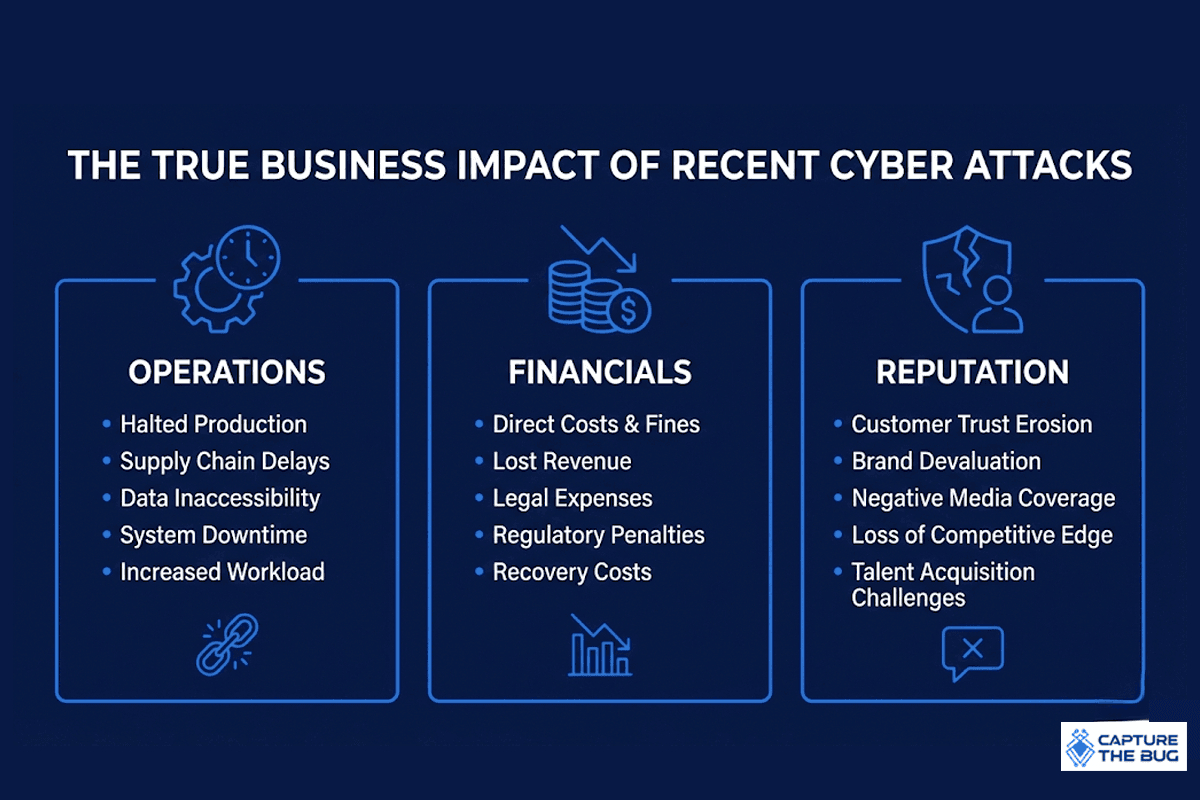
The True Business Impact of Recent Cyber Attacks
The cost of a cyber attack is not limited to technical recovery. Operational downtime leads directly to lost revenue. Customer trust erodes quickly, especially when communication is unclear. Regulatory investigations consume time and resources. Legal obligations can extend for years after the incident.
Internal morale also suffers. Teams experience burnout, leadership confidence is tested, and strategic initiatives are delayed. In 2026, more businesses recognise that the hidden costs of a cyber attack often exceed the visible ones.
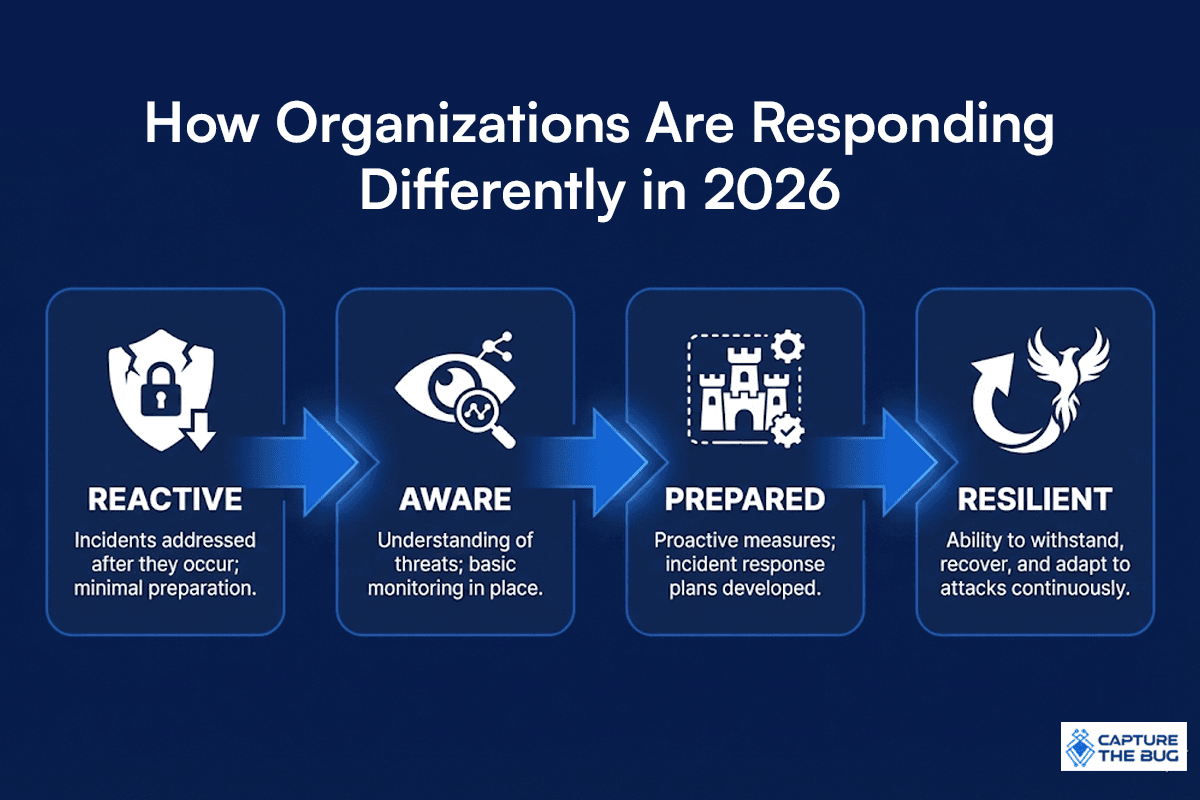
How Organisations Are Responding Differently in 2026
There is a noticeable shift in mindset among more mature organisations. Instead of relying on periodic reviews, many are focusing on continuous visibility into their security posture. Leadership teams want to understand exposure as it exists today, not as it looked months ago. Training programs are becoming more practical and scenario driven, and incident response planning is treated as a core business function, not just a technical exercise.
Transparency has also become critical. Boards and executives expect clear answers, not technical jargon, when incidents occur. This approach aligns with how Capture The Bug supports organisations, emphasising clarity, accountability, and readiness over checklists.
Why Recent Cyber Attacks Matter to Every Business
It is tempting to treat incidents that happen elsewhere as someone else’s problem. That is a mistake. Every public cyber attack reveals patterns that apply broadly. Attackers reuse techniques. They target similar weaknesses. They exploit delays in response. By studying recent attacks, businesses can identify where they may be exposed without learning the hard way.
Final Thoughts
Cyber attacks in 2026 are not anomalies. They are signals. They show what happens when basic security hygiene is overlooked. They highlight the cost of delayed action. They remind leaders that preparation is not optional. Organisations that assume attacks will happen and plan accordingly recover faster, communicate better, and protect their reputation more effectively.
Capture The Bug believes that security should support growth, not hinder it. Learning from recent cyber attacks is one of the most practical steps any business can take this year.
FAQ
What are the most common recent cyber attacks in 2026?
Ransom based attacks, data breaches, service disruption incidents, and supply chain related compromises are the most common.
Why are cyber attacks increasing every year?
Growing digital dependence, expanded access points, and delayed remediation of known issues all contribute to rising attack volumes.
Which industries are most affected by recent cyber attacks?
Healthcare, finance, government, education, and retail continue to experience high impact incidents.
Are small and mid sized businesses targeted?
Yes. Many recent attacks involve organisations that lack the resources or visibility to detect issues early.
What can businesses learn from recent cyber attacks?
Most incidents exploit basic weaknesses that could have been addressed earlier with better visibility and preparation.