Why Security Reports Should Drive Decisions, Not Just List Problems

The Hidden Problem Inside Most Pentest Reports
Many security leaders recognize the moment immediately. A penetration test finishes. A long report arrives. It contains dozens or even hundreds of vulnerabilities organized by severity levels.
At first glance it looks thorough. Technical. Detailed. But after the initial review, a deeper question emerges.
"What should we actually fix first?"
For many CISOs and security leaders, this is where the report stops being useful. Instead of guiding decisions, it simply transfers the burden of interpretation to internal teams.
Developers see a long list of issues. Security managers see multiple risk categories. Executives want to know one thing: Which risks threaten the business right now?
Unfortunately, traditional pentest reports rarely answer that question clearly. The result is a familiar pattern across organizations. Security teams spend days sorting through findings. Developers debate priorities. Critical vulnerabilities sometimes remain open longer than expected.
The issue is not the technical expertise behind the testing. The issue is how the results are presented and interpreted.
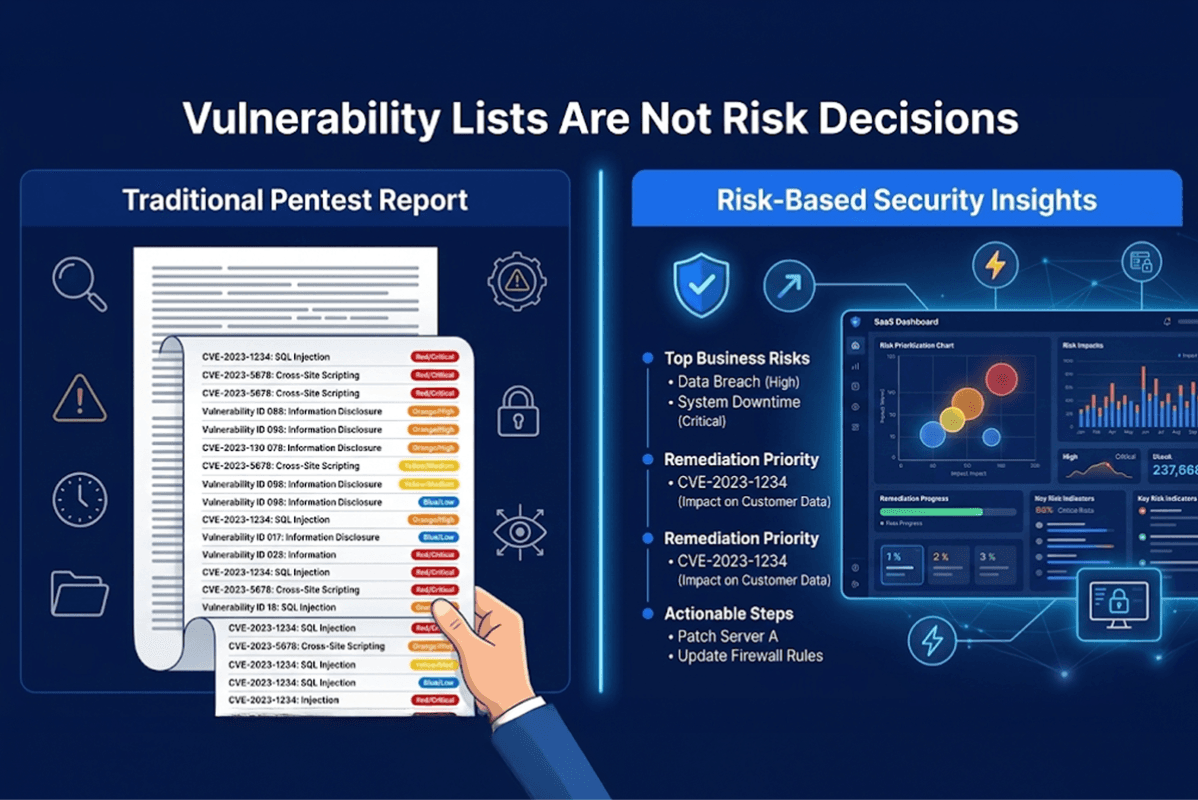
Vulnerability Lists Are Not Risk Decisions
A vulnerability list is not the same as a risk strategy. Many reports follow a standard format. Findings are categorized as Critical, High, Medium, or Low. Each entry includes a technical explanation and remediation guidance.
While this structure is useful for documentation, it does not necessarily reflect real business impact. For example, a high severity vulnerability in a rarely used internal feature may pose less practical risk than a medium severity issue affecting authentication or payment systems.
Yet traditional reports rarely highlight this difference. Instead, CISOs receive a long technical document that treats each vulnerability individually rather than within the context of business operations.
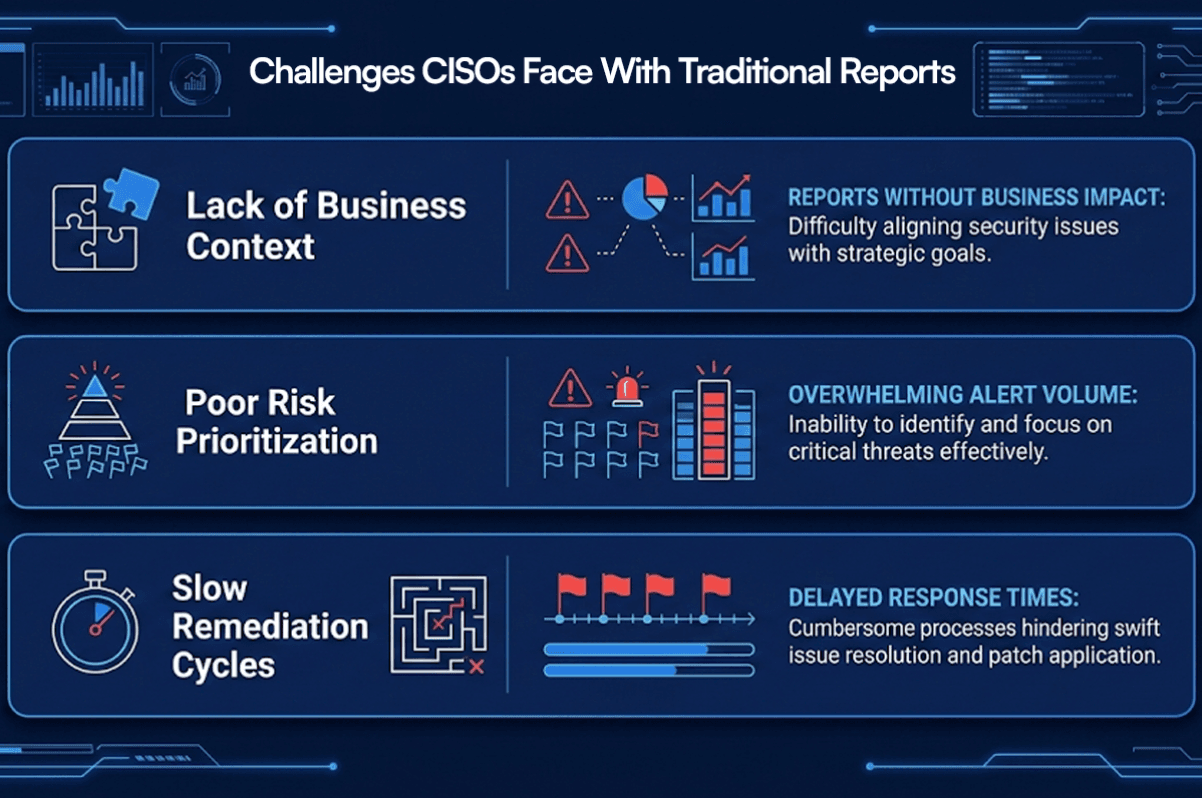
This creates three major challenges:
- Lack of business context: Reports describe technical weaknesses but rarely explain how those weaknesses affect revenue, customer data, or operational continuity.
- Poor prioritization clarity: Security teams must manually determine which issues represent real-world risk versus theoretical exposure.
- Slow remediation cycles: When engineers are unsure which findings matter most, fixes happen slower.
In modern environments where systems evolve rapidly, this delay creates unnecessary exposure.
Why Modern Security Leaders Need Decision Intelligence
Today's CISOs are not only technical leaders. They are business risk managers. Boards, regulators, and customers expect them to clearly answer questions such as:
- Which risks could impact customers?
- What vulnerabilities could disrupt operations?
- How quickly are critical issues being resolved?
A traditional vulnerability list does not provide these answers. What security leaders actually need is decision intelligence.
Decision intelligence means security insights that clearly explain which vulnerabilities represent real exploitable risk, which systems are most exposed, and which fixes should happen immediately.
Instead of raw findings, the report should translate technical discoveries into actionable guidance. In other words, it should help CISOs make informed decisions quickly.
The Problem with Static Security Reporting
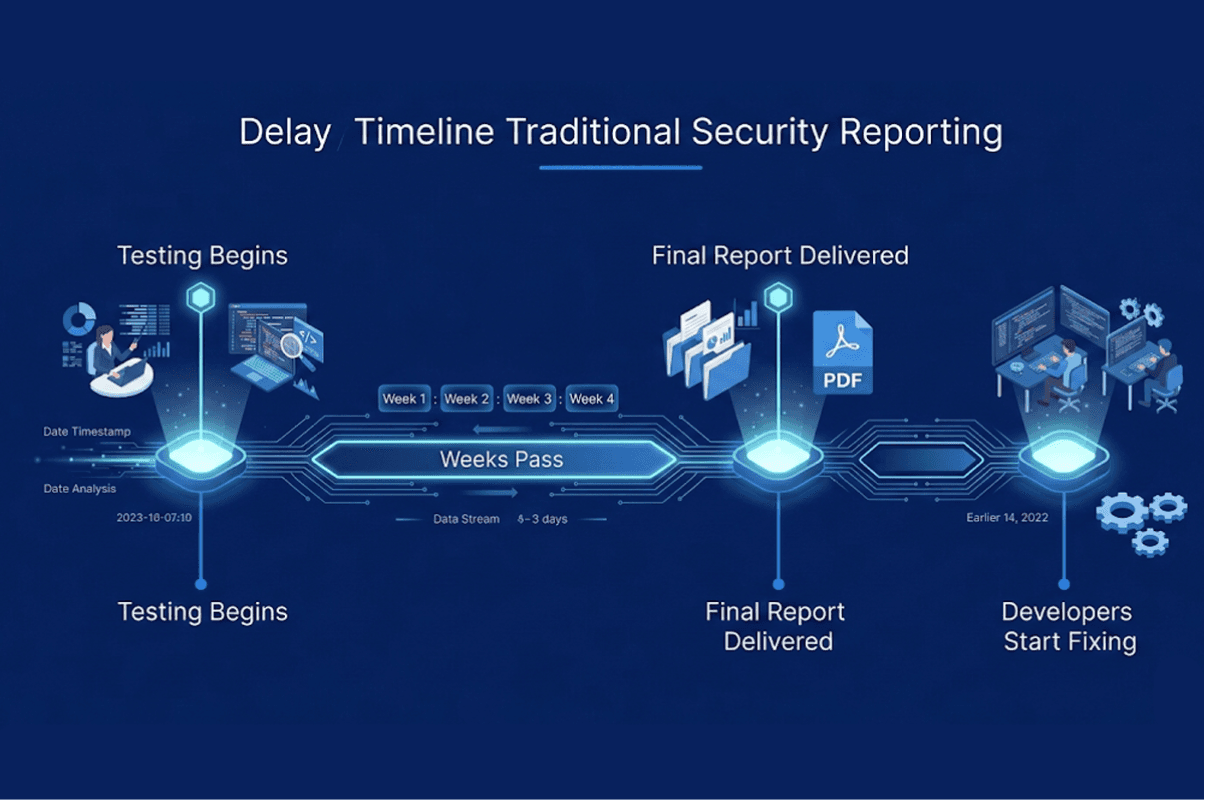
Another major limitation of traditional pentest reports is timing. Most reports arrive weeks after testing begins. By the time the document reaches security teams, parts of the application or infrastructure may already have changed.
This creates a visibility gap. A vulnerability may already be fixed by the time it appears in the report. Or new vulnerabilities may have appeared after testing finished.
This static reporting model creates a security snapshot rather than an accurate picture of current risk.
Modern environments do not operate on snapshots. Cloud infrastructure evolves constantly. SaaS platforms release new features frequently. APIs and integrations expand attack surfaces every month. Security reporting must evolve alongside this reality.
The Shift Toward Continuous Visibility
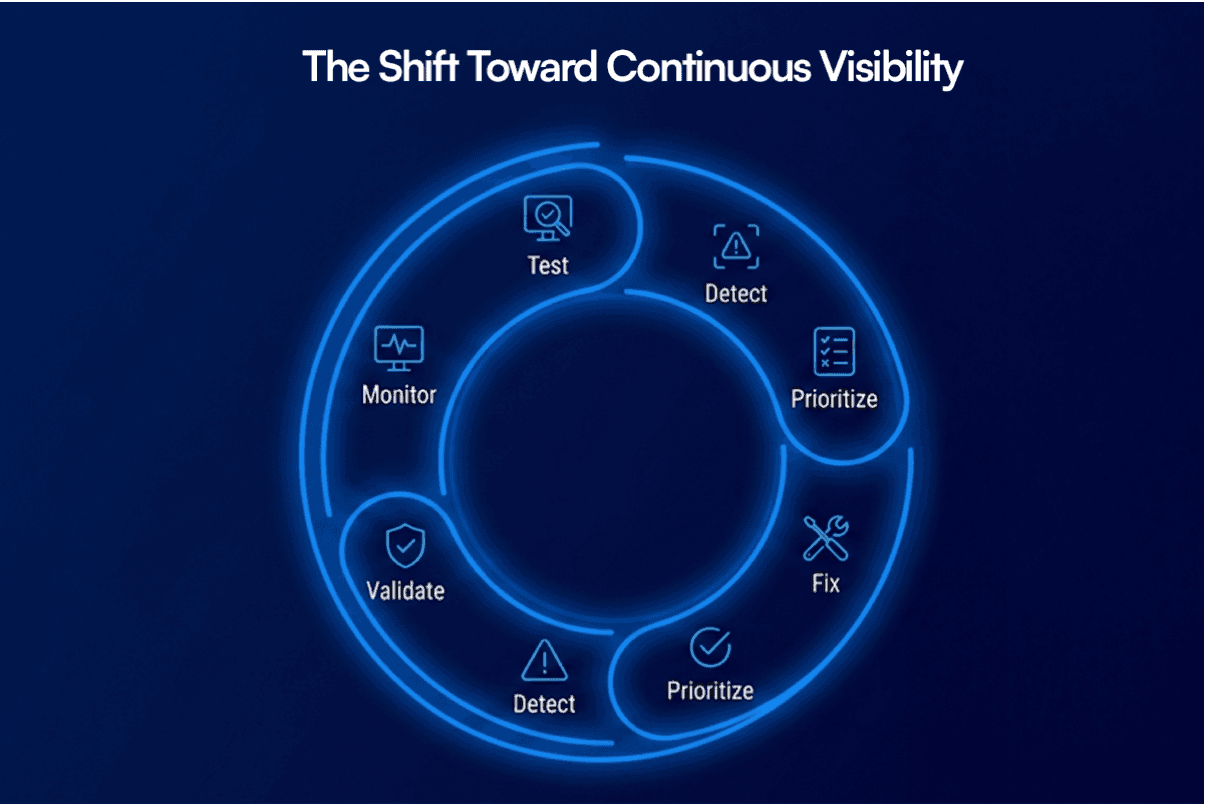
Forward thinking organizations are moving away from static reporting toward continuous security visibility. Instead of receiving one large report at the end of testing, teams monitor vulnerabilities and remediation progress in real time.
This approach offers several advantages:
- Faster detection: Issues become visible immediately rather than weeks later.
- Faster remediation: Developers can begin fixing vulnerabilities as soon as they are confirmed.
- Better prioritization: Security leaders can focus on vulnerabilities affecting critical assets first.
Continuous visibility transforms pentesting from a compliance exercise into a practical security program. This model aligns far better with how modern software systems evolve.
Turning Findings Into Actionable Risk Insights
For a pentest report to truly help CISOs, it must do more than describe vulnerabilities. It must connect technical findings with operational impact. Effective reporting focuses on three key layers:
- Asset importance: Not every system carries the same level of risk. Customer authentication systems, payment processing services, and data storage environments require higher attention than low exposure internal tools.
- Exploitability in real environments: Some vulnerabilities are theoretically severe but difficult to exploit in practice. Others may appear moderate yet expose critical data pathways. Security leaders need context about real exploit scenarios.
- Business impact: The most useful pentest insights explain what could happen if an issue remains unresolved. Could customer accounts be accessed? Could data be exposed? Could operational services be disrupted?
This perspective allows security teams to prioritize fixes with confidence.
How Capture The Bug Approaches Reporting Differently
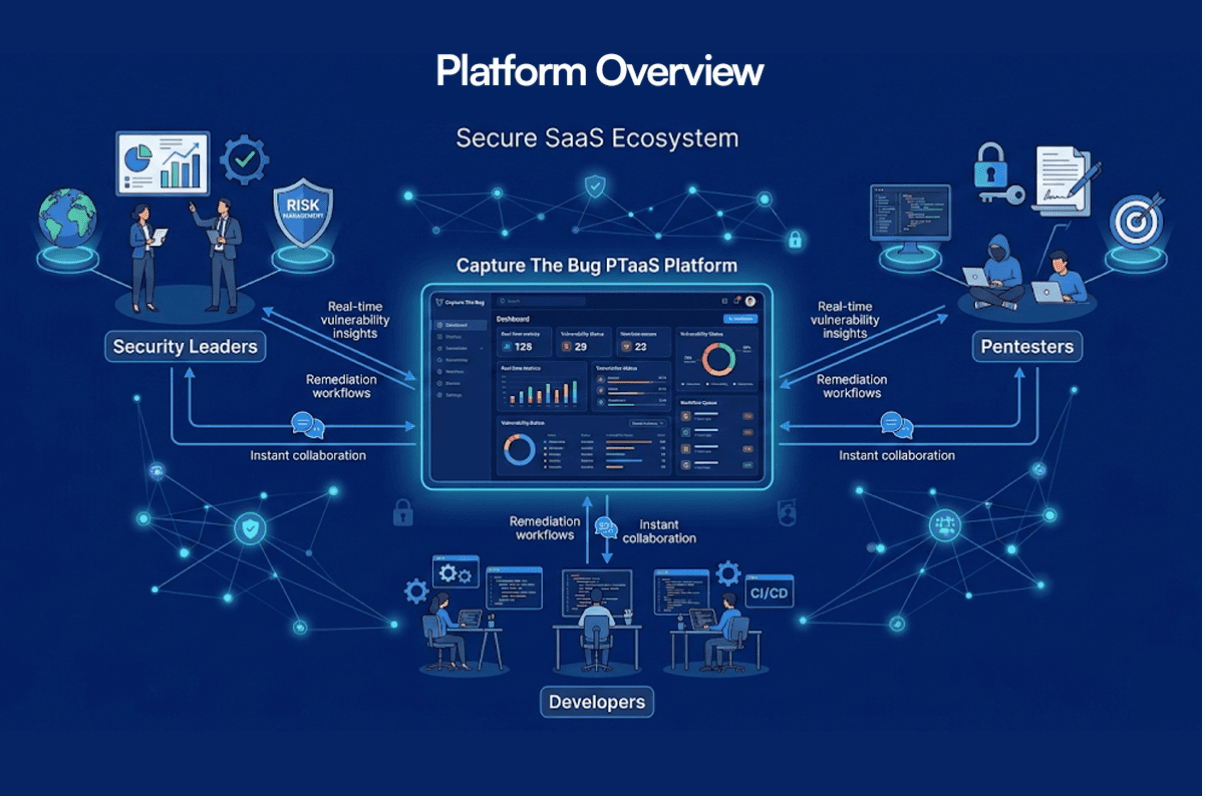
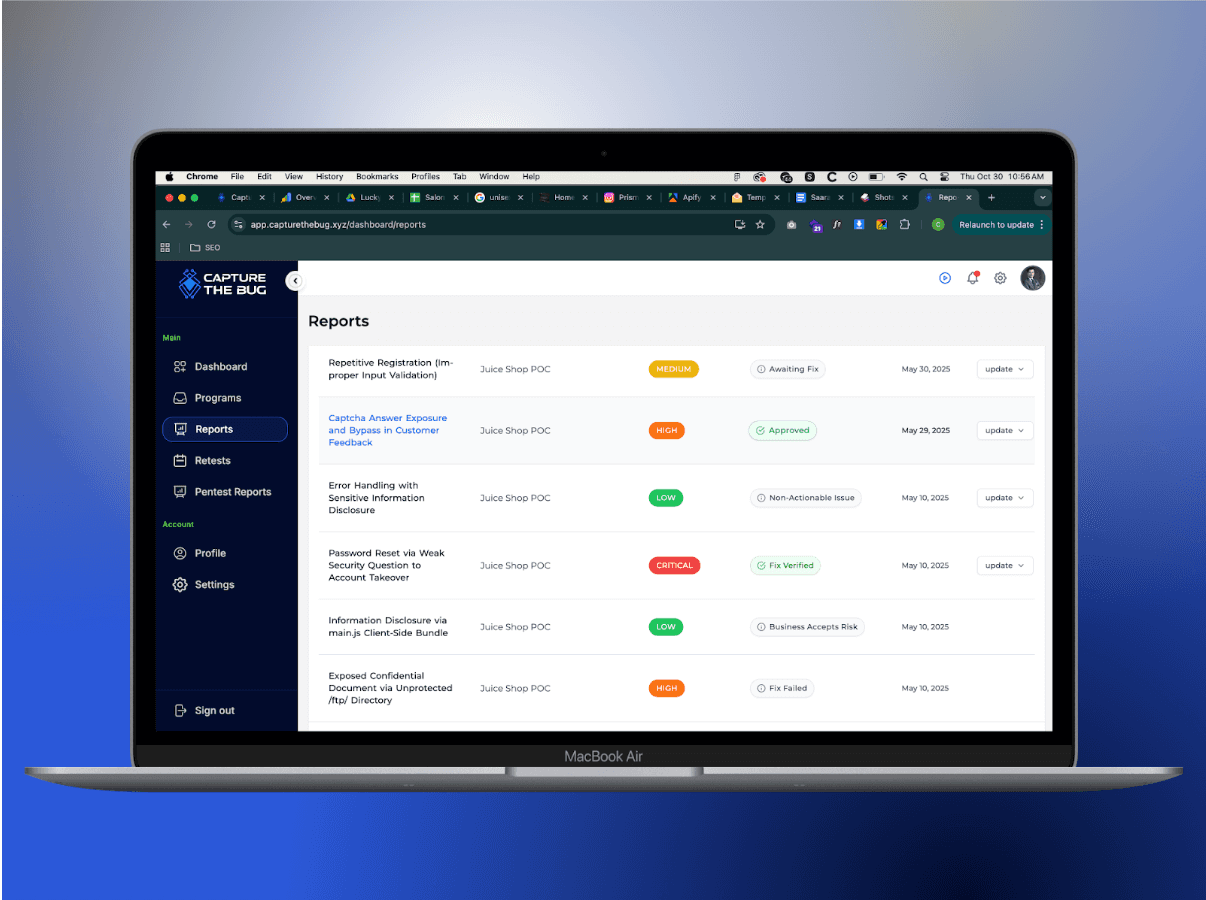
Capture The Bug approaches penetration testing with a focus on clarity and collaboration. Instead of delivering static documents that leave teams guessing, the goal is to provide ongoing visibility into security posture and remediation progress.
This aligns with the broader shift toward Pentesting as a Service (PTaaS), where testing and remediation operate as an ongoing process rather than a one time engagement. Through this model, organizations gain access to:
- Continuous vulnerability tracking
- Real time collaboration between testers and engineers
- Clear prioritization of issues based on business impact
- Compliance ready reporting when needed
The objective is simple: Security insights should help organizations make better decisions, faster. This philosophy reflects a broader industry evolution where pentesting becomes part of everyday security operations rather than a periodic event.
What CISOs Should Expect From Modern Pentesting
"Does the reporting help us act quickly?"
This is the critical question security leaders should ask. A strong pentesting partner should provide clear prioritization of real risks, practical remediation guidance, ongoing visibility into vulnerability status, and context about how findings affect business operations.
When reporting achieves these goals, security teams move faster and organizations reduce exposure more effectively.
The Real Goal of Penetration Testing
The purpose of penetration testing is not to produce a document. It is to reduce risk.
If a report simply lists vulnerabilities without helping organizations decide what matters most, its value becomes limited. Modern cybersecurity leadership requires more than technical discovery. It requires clarity, context, and continuous insight.
That is the difference between a report that documents problems and a security program that helps organizations stay resilient.
FAQ
1. Why do traditional pentest reports fail to help CISOs?
Many reports focus on listing vulnerabilities rather than explaining real business risk. CISOs need insights that show which issues threaten operations or data.
2. What should a modern pentest report include?
It should prioritize vulnerabilities based on business impact, exploitability, and asset importance, helping teams fix the most critical issues first.
3. How does continuous pentesting improve decision making?
Continuous testing provides real time visibility into vulnerabilities and remediation progress, allowing organizations to address risks faster.
4. What is Pentesting as a Service (PTaaS)?
PTaaS delivers ongoing security testing through a platform that provides continuous visibility, collaboration, and actionable reporting instead of static reports.
5. Why is business context important in pentesting reports?
Without business context, security teams may prioritize the wrong vulnerabilities, leaving critical systems exposed longer than necessary.