The Hidden IT You Didn't Approve But Already Use
Every organization has it — technology that wasn't officially approved but somehow slipped into daily operations. A team signs up for a SaaS tool to move faster, a developer installs an extension for convenience, or marketing uploads data to a shared drive outside company policy.
Individually, these seem harmless. Collectively, they create Shadow IT, an ecosystem of unauthorized software, cloud services, and integrations that silently expand your attack surface.
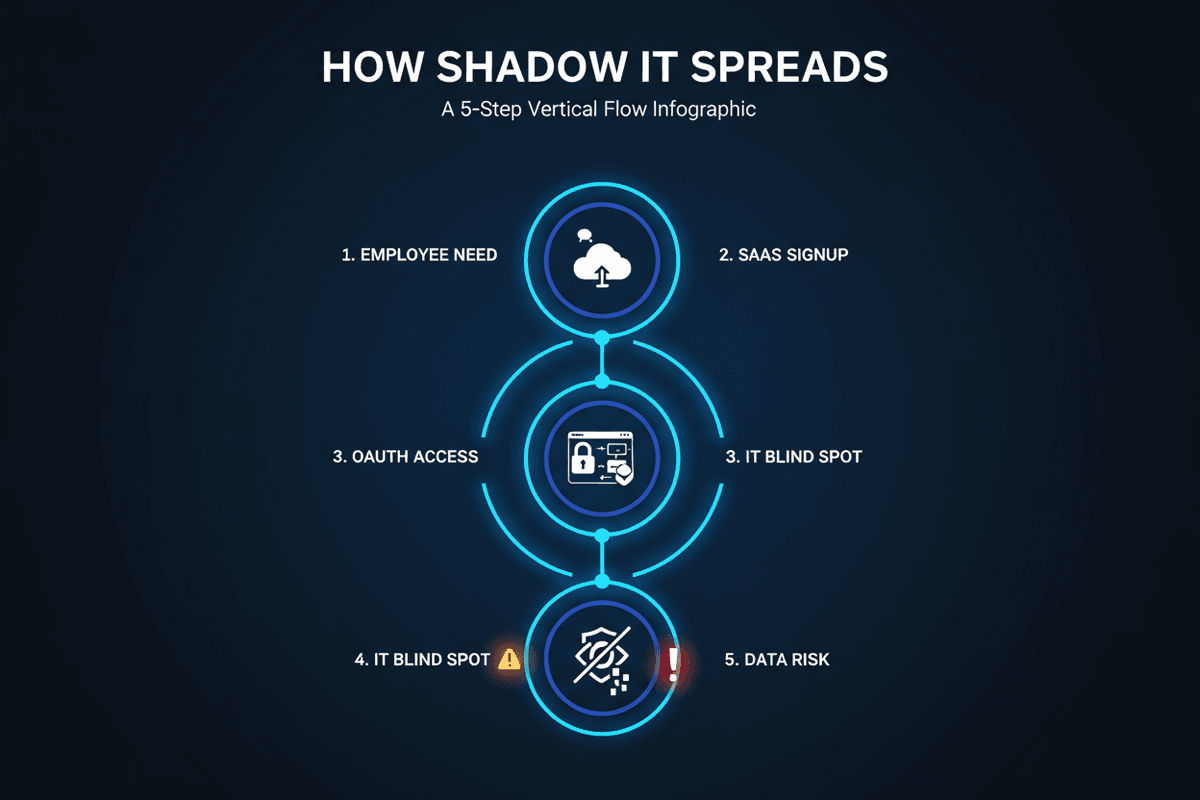
It's not a new problem, but in 2025, it's grown into something far bigger. Today, Shadow IT isn't just rogue Dropbox accounts; it's OAuth consent chains, untracked SaaS apps, forgotten APIs, and even AI plug-ins that handle sensitive data outside your governance.
What Exactly Is Shadow IT?
Shadow IT refers to any technology — apps, software, cloud platforms, or integrations — used without IT or security team approval. It emerges because teams move fast, and formal IT processes often can't keep up.
It's rarely malicious. In fact, it usually begins with good intentions: employees want to get things done faster. But every unmonitored tool becomes a potential data leak, compliance gap, or unprotected access point.
Common Examples of Shadow IT
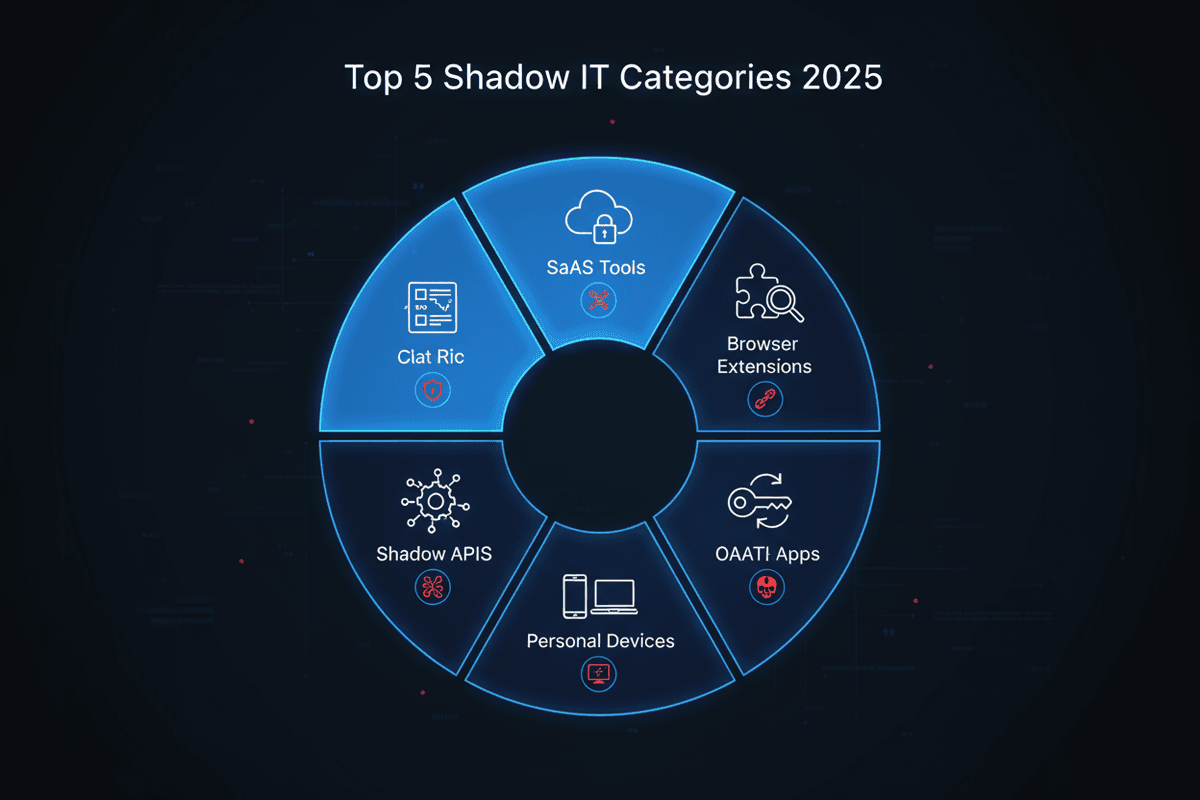
- Unapproved SaaS tools like document-sharing or project management platforms
- OAuth-enabled apps that request "Sign in with Google" permissions and retain persistent data access
- Browser extensions that collect sensitive page or session data
- Shadow APIs such as legacy or undocumented endpoints that remain exposed
- Personal devices and storage used for work communication or backups
A typical company thinks it manages 40 apps. In reality, the number is closer to 400.
Why Shadow IT Exists: The Speed vs. Control Trade-Off
Shadow IT often starts as a symptom of something deeper: friction.
- Remote teams want quick solutions and don't wait for IT approvals
- SaaS sprawl makes new tools accessible in a click
- OAuth permissions create invisible cloud-to-cloud connections
- AI and productivity tools make employees upload data to external systems without review
When IT teams can't meet user needs fast enough, users route around them. Over time, that bypass becomes culture.
But the real danger isn't speed — it's invisibility. What you can't see, you can't secure.
The Real Risks of Shadow IT
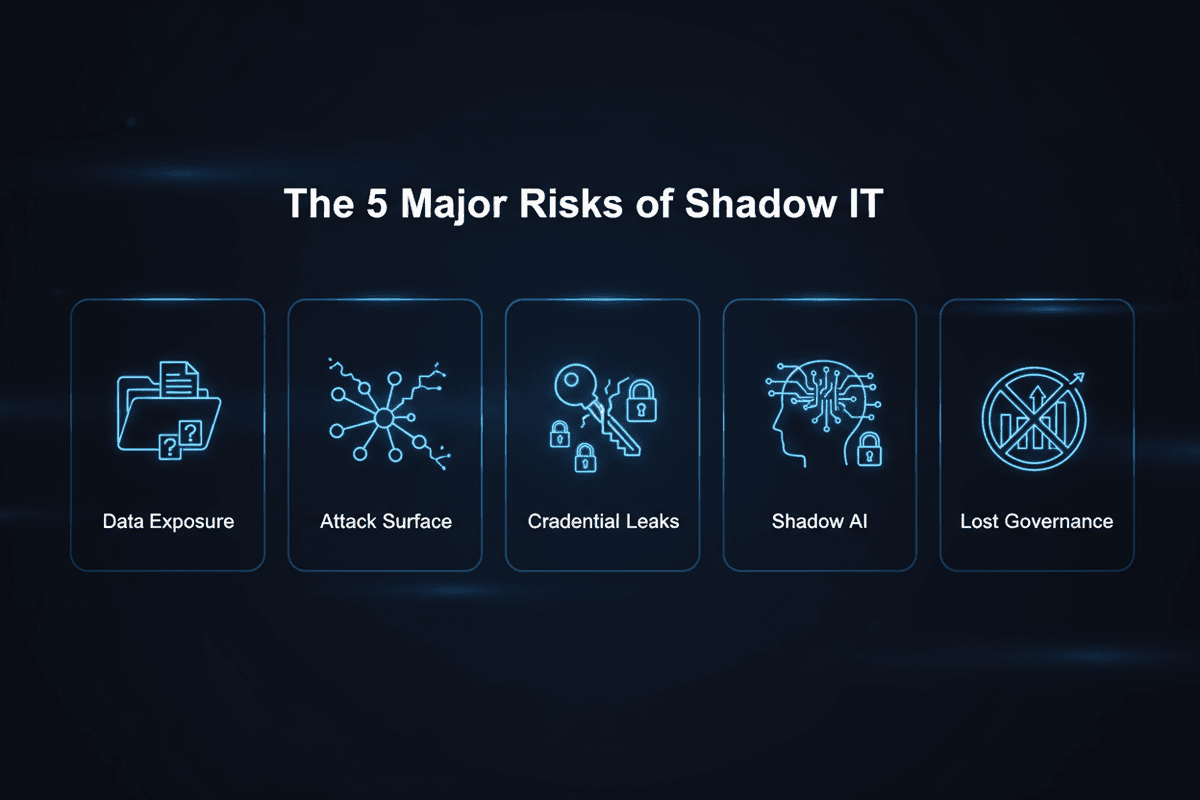
Data Exposure & Compliance Gaps
Sensitive data often ends up outside protected systems — in personal drives, AI chat tools, or unsanctioned apps. When auditors ask where your customer data lives, you may not have the full answer.
Example: A finance team uploads internal reports to a personal Google account to collaborate faster. Months later, the account is compromised.
Expanded Attack Surface
Every untracked app, API, or add-on becomes an open door. Attackers look for these blind spots — unmonitored endpoints, unused test environments, or OAuth tokens that never expire.
Credential & Access Risks
OAuth grants, browser extensions, and third-party logins create persistent access beyond traditional monitoring. Once exploited, they can bypass MFA and remain undetected for months.
Shadow AI & Data Leakage
Employees increasingly paste proprietary data into AI tools to save time. Those inputs can train external models, leak intellectual property, or violate privacy laws.
Lost Visibility & Governance
Shadow IT breaks your audit trail. Security teams can't protect what they don't know exists — and incident response becomes guesswork.
How to Detect Shadow IT
Modern detection isn't just about network logs. It's about connecting visibility across SaaS, cloud, and endpoints.
Start with Network and Endpoint Telemetry
Use proxies, firewall logs, or EDR data to identify traffic to unknown SaaS domains. Large uploads to file-sharing sites often flag hidden usage.
Review OAuth & SSO Permissions
Check your identity providers such as Google Workspace or Microsoft 365 for unapproved OAuth grants. Flag apps requesting full inbox or drive access.
Run Continuous Asset Discovery
External Attack Surface Management tools map domains, APIs, and exposed assets. It's the modern inventory baseline for security visibility.
Implement SaaS Security Posture Management
SSPM tools highlight which sanctioned apps have risky configurations or drifted from policy — bridging the gap between approved and unapproved use.
Partner with a Continuous Pentesting Provider (PTaaS)
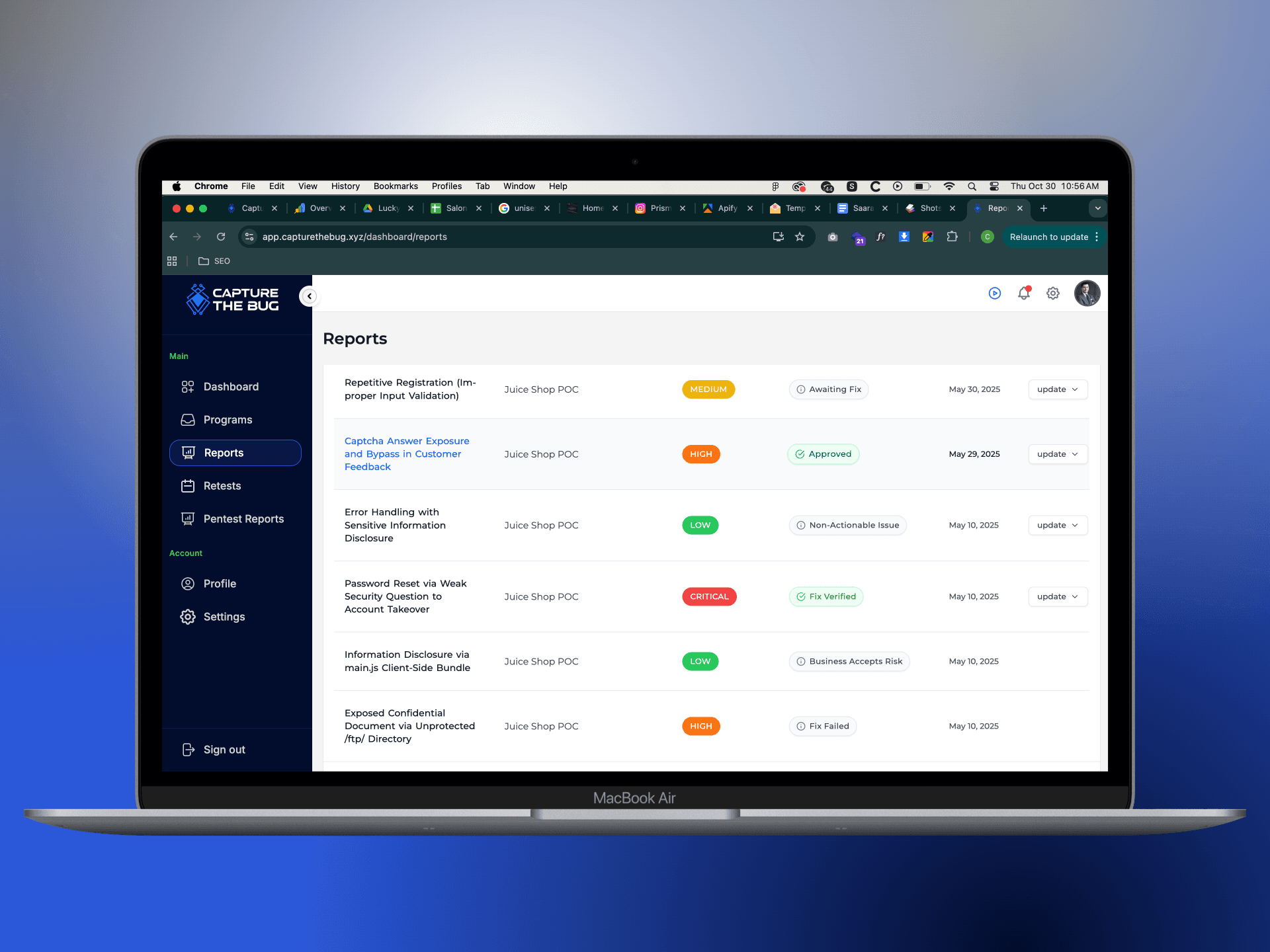
Platforms like Capture The Bug combine continuous discovery and real-world testing. They help validate which shadow assets are actually exploitable, not just visible.
Example: Our clients often discover untracked staging servers, zombie APIs, or expired domains actively probed by attackers — all uncovered within the first 48 hours of PTaaS onboarding.
How to Manage Shadow IT
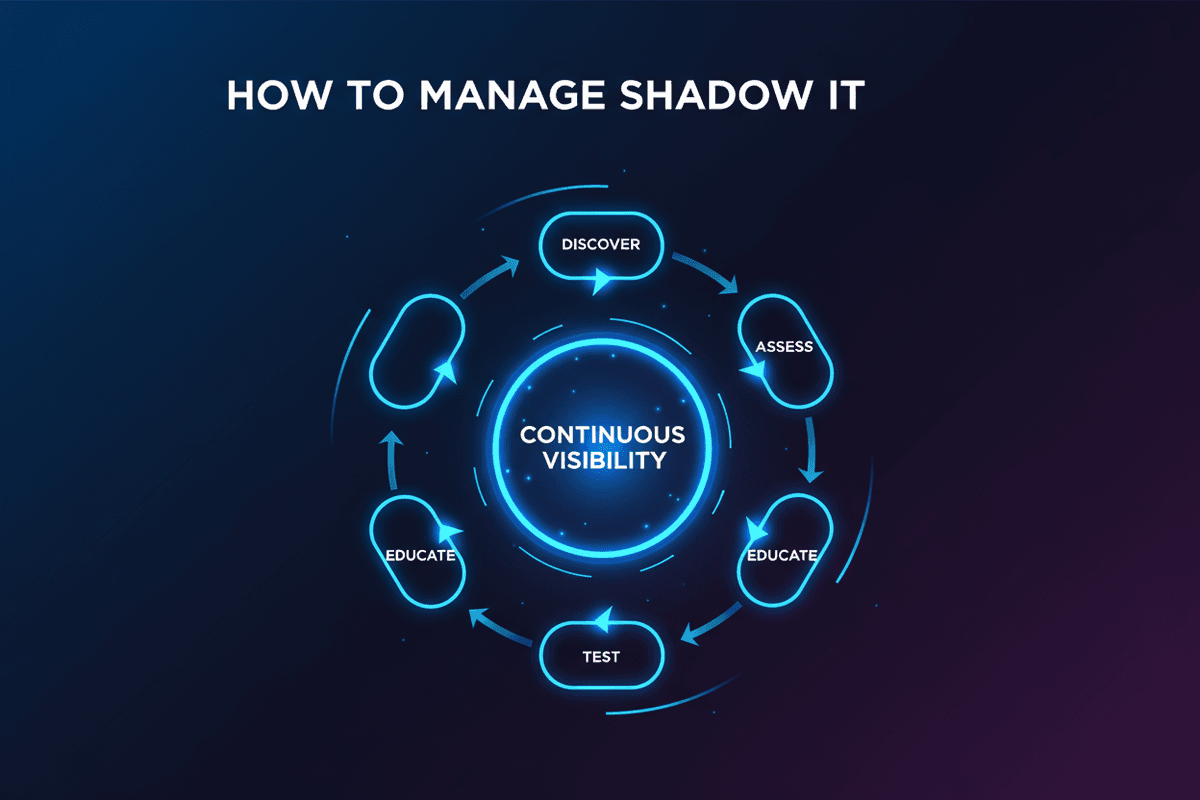
Build a Fast, Friendly Intake Process
Most Shadow IT happens because approval is too slow. Offer pre-approved SaaS tools and a lightweight review form for new requests. Make it easy for teams to stay compliant.
Educate, Don't Punish
Employees use unauthorized tools because they want to be productive. Train them to recognize risks, explain what's safe, and give them safer alternatives.
Implement Risk-Based Access
Not every tool needs admin access or full data permissions. Set granular OAuth scopes and automatically revoke unused tokens monthly.
Run Continuous Pentesting & Shadow Asset Validation
Combine discovery with testing. Detect unknown apps or APIs, validate their exposure, and track remediation progress.
With PTaaS, security becomes measurable. Every new shadow asset is discovered, verified, and remediated before attackers find it.
Make Ownership Clear
Assign system owners and define lifecycle policies. When a project ends, its tools and credentials should retire with it — preventing orphaned shadow systems.
The Role of Continuous Pentesting (PTaaS)
Static asset scans tell you what exists. Continuous Pentesting tells you what matters.
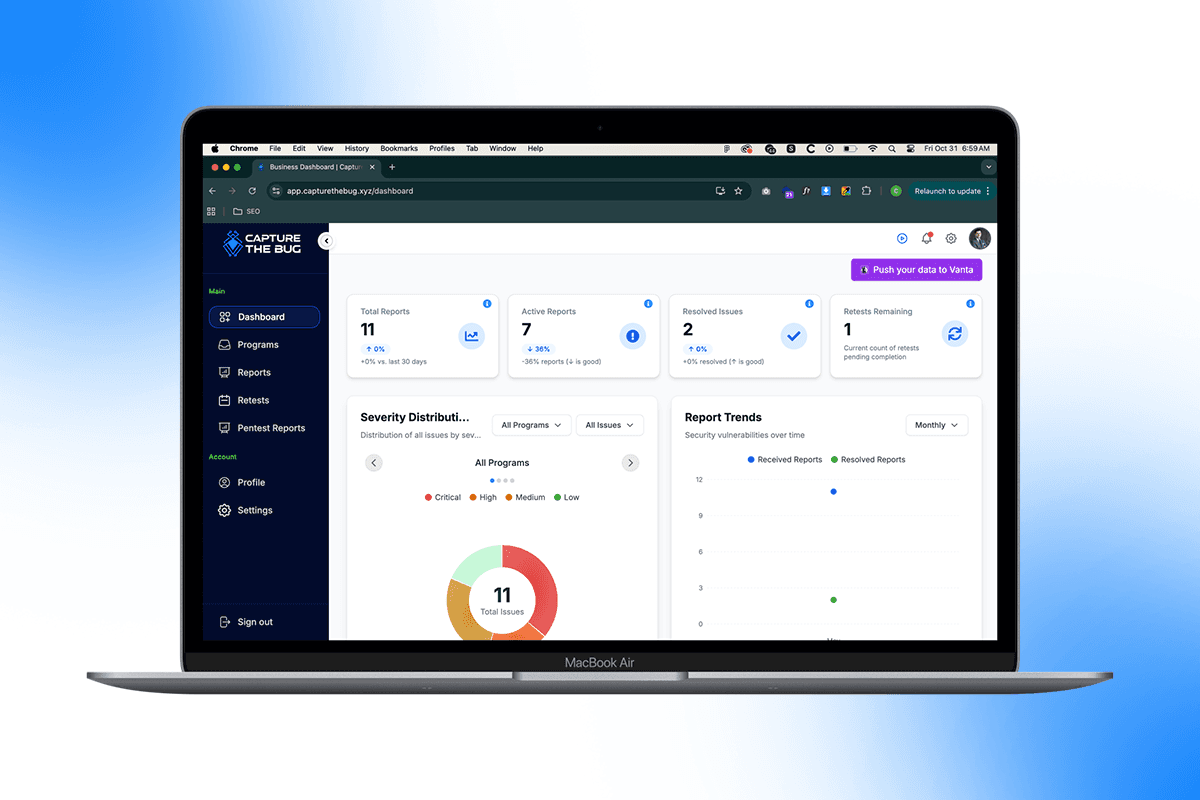
Capture The Bug's PTaaS platform helps organizations close Shadow IT blind spots by:
- Discovering untracked SaaS, APIs, and domains in real time
- Testing them for exploitable vulnerabilities
- Validating fixes and generating audit-ready reports
- Providing continuous dashboards for visibility and compliance tracking
Shadow IT can't be eliminated, but it can be managed intelligently. PTaaS gives you the confidence that every unknown tool is known, tested, and secured.
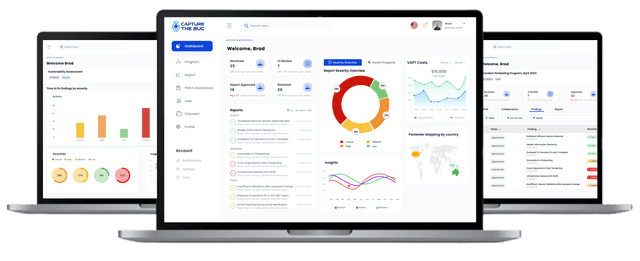
Experience Capture The Bug Platform
Streamline your security testing with our PTaaS platform. Collaborate with expert testers, track vulnerabilities, and secure your applications effortlessly.
Metrics That Matter
Track metrics that show progress:
- Number of unsanctioned apps discovered and removed
- Mean time to discovery and remediation
- OAuth permission reduction rate
- External asset coverage percentage
- DLP or data exposure reduction over time
What gets measured gets secured.

Final Thoughts
Shadow IT isn't the enemy. It's a mirror. It shows where your teams move faster than your systems can adapt.
The goal isn't to block innovation; it's to build guardrails that protect it.
By combining visibility tools, user education, and continuous pentesting, you can turn Shadow IT from a liability into a learning loop.
At Capture The Bug, we help companies map their real attack surface — including the assets they didn't know existed. Because in cybersecurity, ignorance isn't bliss. It's exposure.
Frequently Asked Questions
1. What is Shadow IT in simple terms?
Shadow IT means using tools or services without IT approval — from SaaS apps to browser extensions.
2. Why is Shadow IT risky?
Because it creates hidden data flows and unmonitored access, exposing organizations to data leaks and compliance gaps.
3. How do I detect Shadow IT?
Start with network and identity logs, run continuous asset discovery, and integrate a PTaaS platform to validate and secure unknown assets.
4. Can Shadow IT be prevented completely?
Not entirely, but it can be controlled with user awareness, faster approval processes, and real-time visibility.
5. How does PTaaS help manage Shadow IT?
PTaaS continuously discovers and tests hidden assets, verifying which ones pose real threats and helping security teams fix them fast.
One platform to manage, track, and secure all your penetration tests.
Simplify your vulnerability management with Capture The Bug’s PTaaS platform where businesses and security experts collaborate seamlessly.