Manual Web Application Security Testing: Complete Guide for 2025
Every company today is shipping faster, growing faster, and exposing more digital touchpoints than ever before. Yet the uncomfortable truth remains the same: most breaches still occur because someone simply checked too late or missed a detail a tool could not understand.
Manual web application security testing remains one of the few disciplines where deep human reasoning, curiosity, and scenario-based thinking uncover what structured tools cannot see. In 2025, businesses rely on manual testing not because technology is outdated, but because technology alone cannot interpret intent, process flow, or real-world misuse the way an experienced tester can.
This guide breaks down how manual testing works, what it uncovers, and why combining it with a continuous testing platform like Capture The Bug offers the strongest security posture for growing teams.
What Manual Web Testing Really Means in 2025
Manual testing is more than following a checklist or replaying known attack paths. At its core, it’s about understanding how your application behaves under real-world misuse. Testers think like adversaries but act like partners, exploring everything from user journeys to hidden logic flows.
Modern manual testing focuses on four core layers:
1. Business Logic Exploration
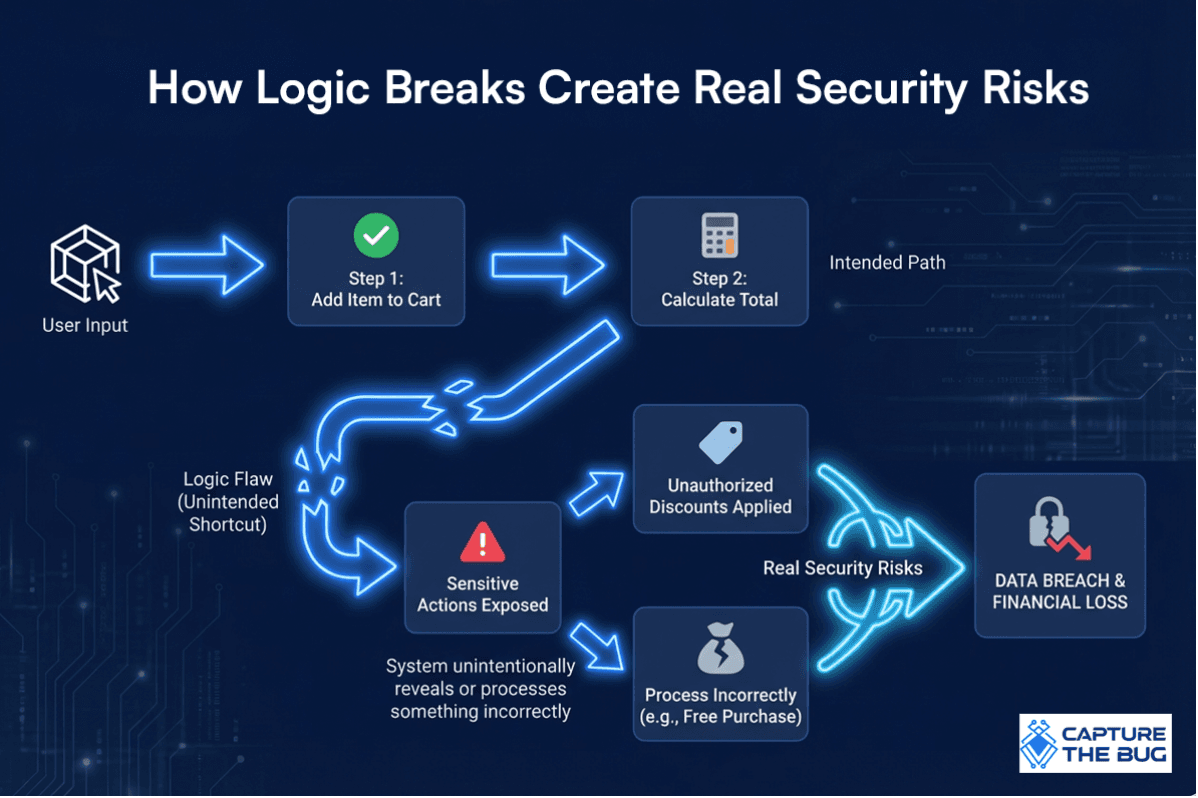
Attackers rarely follow rules, and real-world breaches often stem from predictable human behavior exploited in unpredictable ways. Manual testers explore:
- How your application handles unusual sequences
- Where assumptions break
- How user roles interact
- How money, data, and trust move across the system
These are the vulnerabilities that structured tools miss entirely because they cannot infer intent or process flow.
2. Deep Input and Workflow Testing
Manual testers push your application in ways ordinary users wouldn’t:
- Non-linear navigation
- Out-of-order actions
- Uncommon data combinations
- Unintended role interactions
This reveals integrity flaws, privilege confusion, and hidden paths.
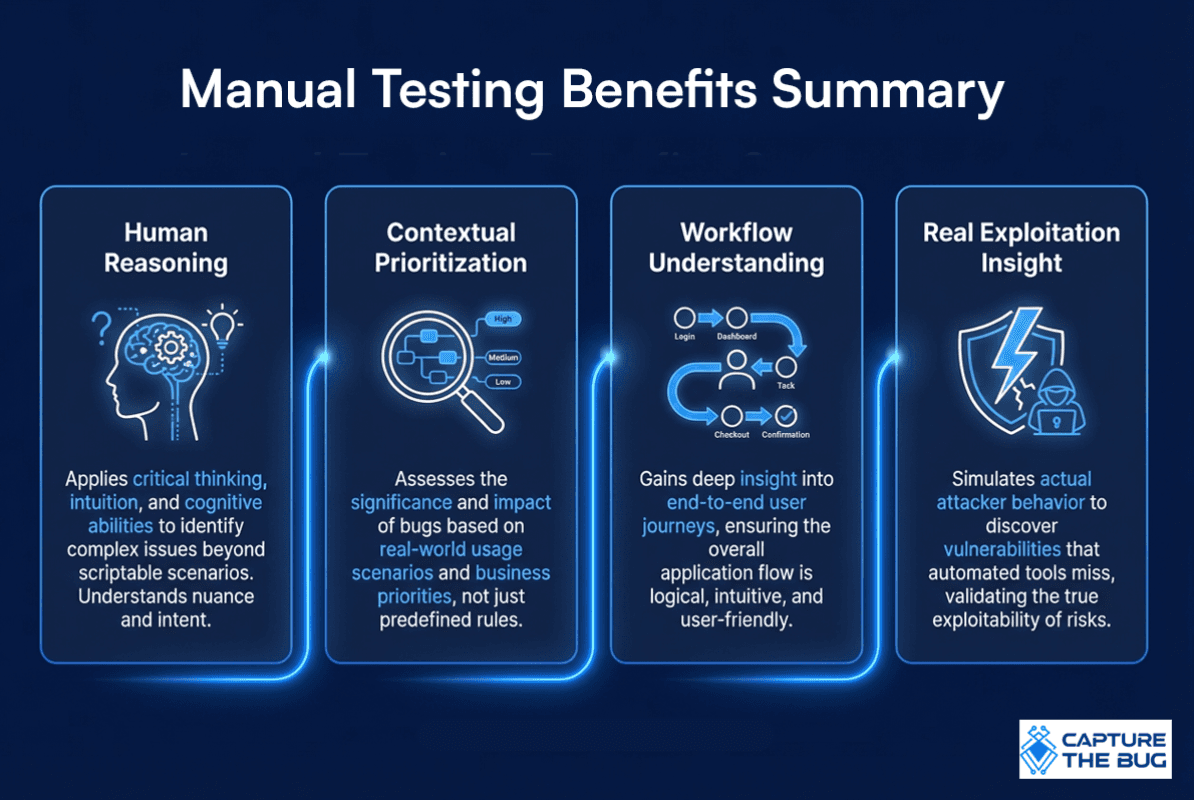
3. Realistic Exploitation Attempts
When testers validate a potential flaw, it’s not about noise - it’s about clarity. They confirm exactly:
- What can be accessed
- How damaging it could be
- Whether it can be reproduced
- How it should be prioritized
No guesswork. No long lists. Just insight you can act on.
4. Human Interpretation of Impact
A genuine tester looks at your app the way a founder or product owner would: What would actually happen to the business if this broke? That level of reasoning cannot be automated.
Why Companies Still Choose Manual Testing Over Purely Automated Approaches
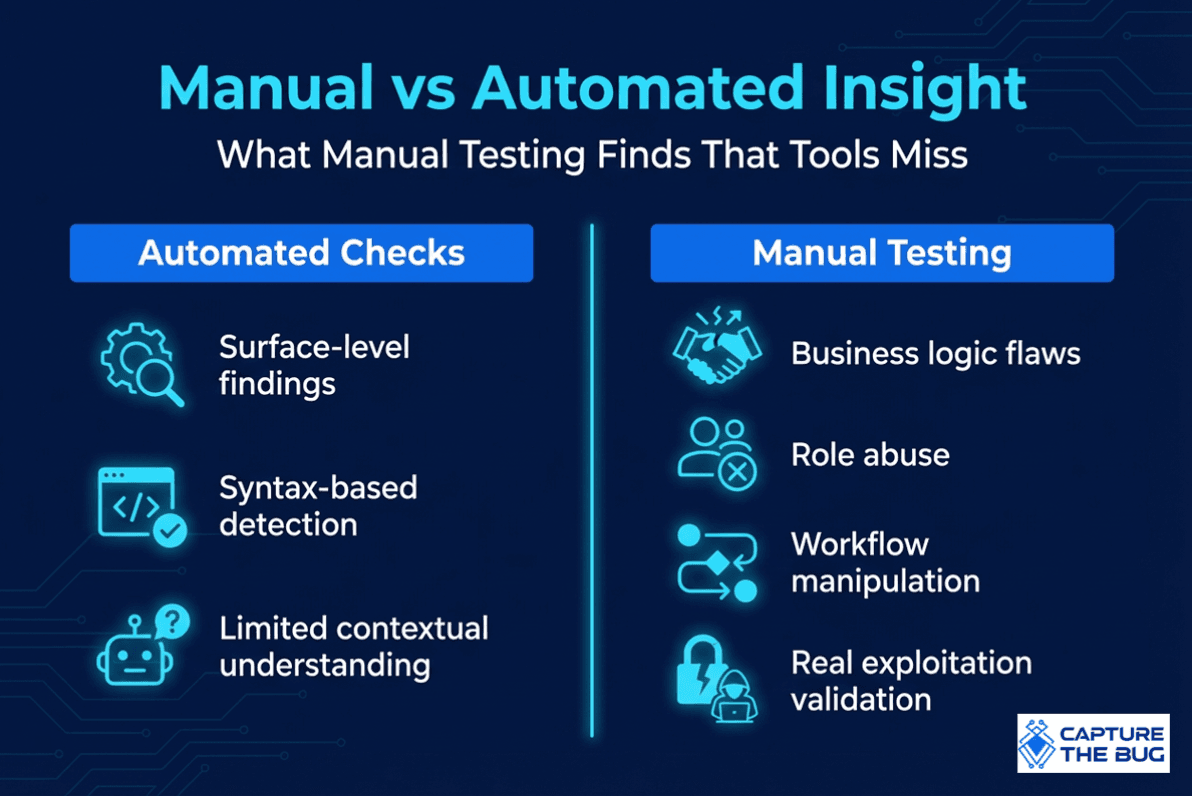
Many organizations today rely on continuous checks from various tools, but those checks are limited by design: they don’t understand business rules, data relationships, or the consequences of actions.
Manual testing adds what machines cannot deliver:
- Human intuition: A skilled tester sees patterns, abuses, shortcuts, and creative angles that structured checks will never detect.
- Contextual prioritization: Instead of treating every issue as equal, manual testers explain what’s truly urgent - and why.
- Cross-feature reasoning: Real-world vulnerabilities often emerge when two unrelated features interact. Human testers explore these overlaps.
- Hands-on collaboration: The best manual testers become extensions of your team — clarifying findings, helping developers reproduce issues, and reducing friction.
The Manual Testing Workflow: How Expert Testers Work Step by Step
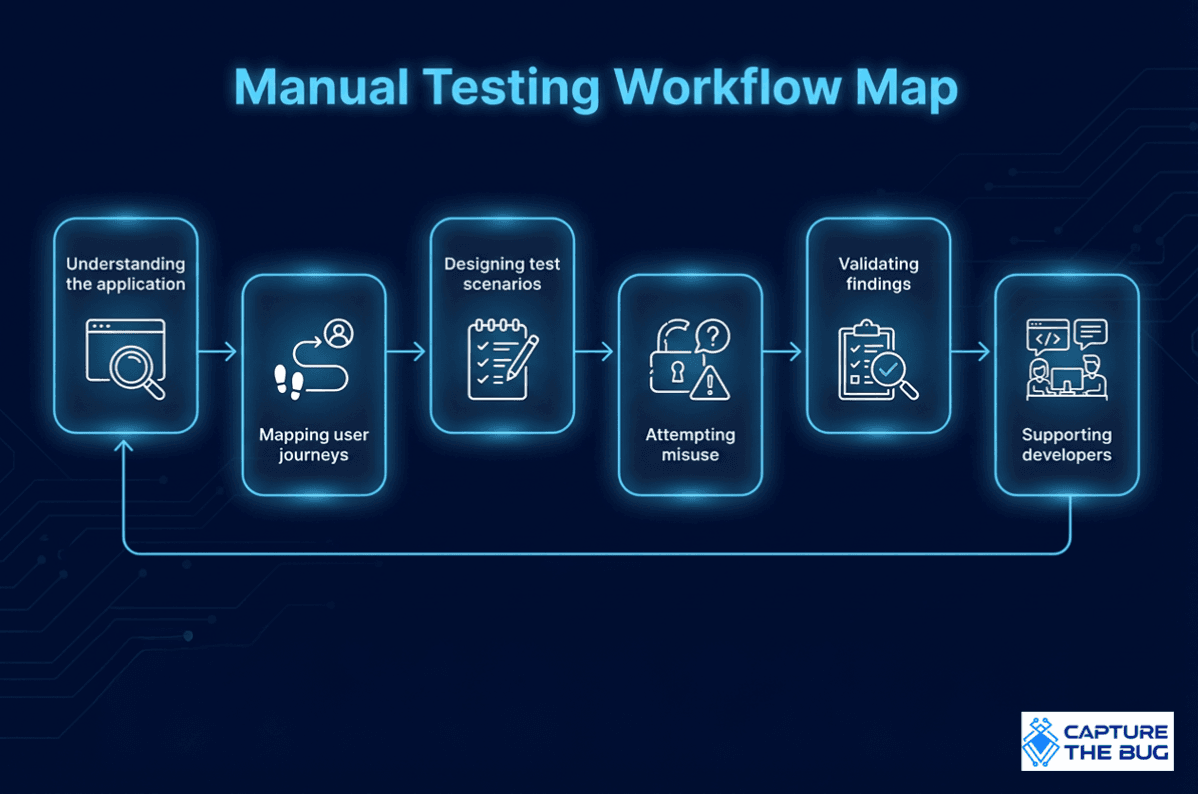
Here’s how a typical manual web application test unfolds:
1. Discovery and Understanding
Testers begin by learning your application’s purpose, data flows, roles, and assumptions. This understanding shapes the entire test.
2. Mapping User Journeys and Hidden Paths
They explore every corner — from sign-up to account closure — identifying visible and invisible entry points.
3. Crafting Scenarios
Instead of pushing random inputs, testers design meaningful scenarios aligned with your platform’s logic.
4. Attempting Realistic Misuse
This is where skill shines. Testers:
- Stretch permissions
- Manipulate state
- Combine actions
- Trigger behavior outside expected flows
5. Leading With Validation
Every finding is real, reproducible, and validated. No noise. No filler.
6. Collaborative Remediation
Good testers don’t drop a report and disappear. They walk your team through what happened, why it matters, how to fix it, and how to prevent reoccurrence. This is where manual testing proves its value.
What Manual Testing Finds That Tools Miss
Manual testers reveal high-risk issues tied to human behavior and system logic:
- Broken workflows
- Role escalation paths
- Assumptions that expose sensitive data
- Pricing or subscription manipulation
- Checkout and transaction anomalies
- Misuse of third-party integrations
- Incorrect trust boundaries
- Gaps in verification steps
These are the vulnerabilities attackers use to make real profit - and they rarely show up in structured testing outputs.
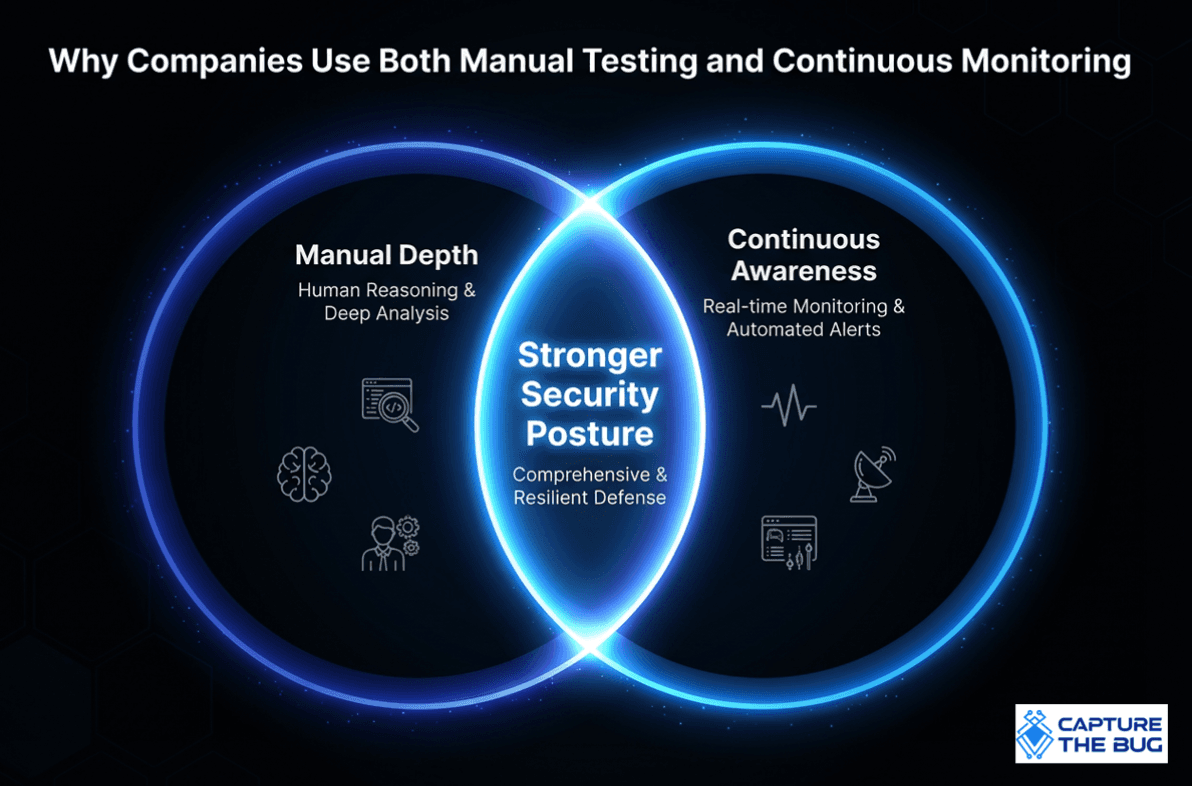
Why 2025 Demands a Hybrid Approach: Manual + Continuous Validation
Here’s where Capture The Bug enters the picture.
Manual testing is deep but periodic. Modern software changes too quickly for an annual or quarterly approach. Teams today benefit most from two complementary layers:
1. Manual Testing for Depth
Captures the logic flaws, business risks, and misuse scenarios no automated process can identify.
2. Continuous Testing for Breadth and Awareness
Provides ongoing visibility so your team always knows what changed, what reintroduced risk, and what needs attention now.
Instead of relying solely on one-off testing cycles, companies now prefer continuous insight with manual depth built into the process.
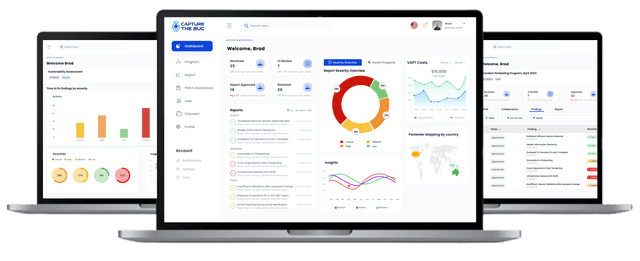
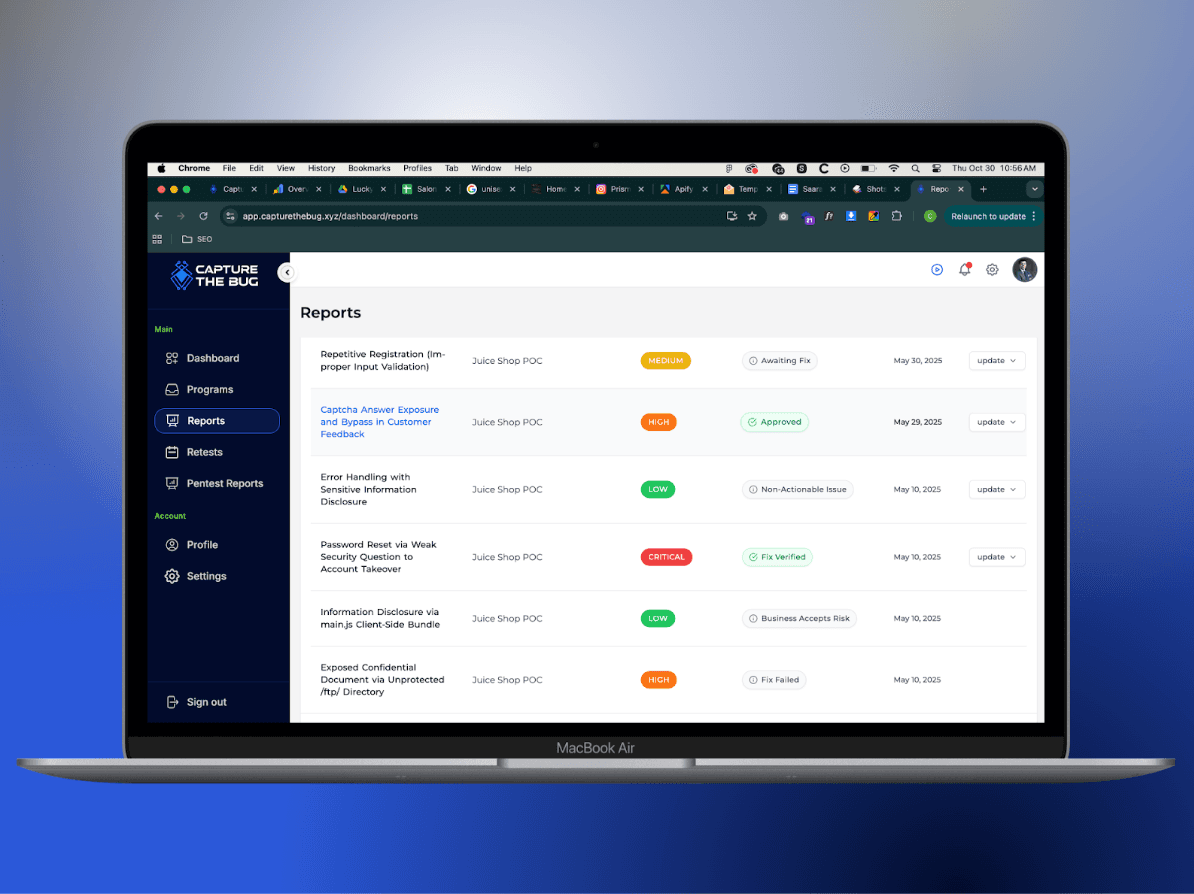
Capture The Bug combines both: expert-driven testing with a platform that keeps visibility alive between engagements. This means you see findings as they appear, your team collaborates directly with testers, fixes can be validated quickly, and reports remain up to date.
No forbidden terms. No overpromising automation. Just human-first clarity supported by continuous awareness.
How Capture The Bug Approaches Manual Testing Differently
Capture The Bug brings a founder-minded approach to manual testing:
- Real testers, real communication: You get direct access to people who understand your technology and business model - not a blind inbox.
- Clear explanations, not long lists: Every issue is explained in plain language, with impact and business risk at the center.
- Context-aware prioritization: Your team gets a realistic picture of what needs fixing first, and what can wait.
- Continuous collaboration: Fixes don’t disappear into email threads. They’re validated and tracked until fully resolved.
- Compliance-ready outputs: While the testing is human-driven, the documentation is structured for ISO 27001, SOC 2, and other frameworks.
In short: Capture The Bug doesn’t just test your application. It strengthens the entire way you handle security.
When Should You Choose Manual Testing?
Manual testing is essential when:
- Your app handles sensitive data
- Your user journeys are complex
- You support multiple roles and permissions
- Revenue or billing depends on correct logic
- Your team ships frequently and needs clarity
- You’ve built custom workflows tools cannot understand
- You want real explanations, not lists of issues
If you don’t know how an attacker might think, manual testing is how you find out safely.
Conclusion: Manual Testing Is Not Old-School - It’s Business Sense
In 2025, manual web application testing remains irreplaceable. Not because tools are outdated, but because tools cannot understand the human element of your application — the logic, decisions, assumptions, and economic value embedded in your workflows.
The strongest security programs today combine:
- Manual insight
- Continuous visibility
- Clear collaboration
- Real-time clarity
- Human judgment
That’s the model Capture The Bug uses to help companies stay secure without slowing innovation.
If you build fast, move fast, or grow fast - manual testing is your safety net, and continuous validation is the rope that keeps it strong.
FAQ
1. What is manual web application security testing?
It’s the process where skilled testers explore your application like a real attacker, uncovering flaws tools cannot understand - such as business logic errors and role misuse.
2. Why is manual testing essential in 2025?
Because modern apps rely on complex workflows, integrations, and user behaviors that cannot be interpreted accurately by automated checks alone.
3. What does manual testing find that tools miss?
Role escalation, workflow manipulation, incorrect assumptions, and real-world misuse scenarios.
4. Should I combine manual testing with a continuous security approach?
Yes. Manual testing gives depth, and continuous monitoring gives awareness. Together, they provide the strongest protection.
5. How does Capture The Bug support manual testing?
Through expert-led testing, direct collaboration, validated findings, and a platform that gives real-time visibility and compliance-ready outputs.